Coastal
sojourn
When you think of western India, you cannot escape Shirdi, Mumbai and
Goa. We did the same when we planned our first Goa trip, we added Shirdi and Mumbai
in our itinerary too. Do read our plan trip at the end


Two years back we missed our Pondicherry trip as we could not confirm our railway tickets till the last moment. So this year, we planned our trip much in advance. First we zeroed in on Goa and then we added Mumbai to our itinerary. Then we thought, if Mumbai why skip Shirdi? We tried to book our train tickets exactly two months in advance but in spite of that, our tickets from Delhi to Shirdi, and Goa to Delhi landed in the waitlist. But as we were in the first 10, we thought no issues. But till the last moment, our position did not move even one seat forward. And on the last day, we were waiting with our bags packed and bated breath for the tickets to give us green signal. Exactly two hours before the train’s departure, we got to know that actually our trip was actually on. By then we were already thinking of alternative destinations. Everybody who knew about our trip were advising us about ‘positive affirmation’ and that if Sai Baba wants, we would definitely go as our first destination was Shirdi.
But we almost missed our train, we thought it was scheduled for 12 noon on the 9th of June but actually it was 12 midnight between 8 and 9. Luckily, we noticed the timing 00:00 hours just hours before and we couldn’t stop laughing. When my mom-in-law heard about it, she too said: ‘How can you not spot 00 hours’. She once missed the train because of the same confusion, so she sounded more cautious now.
At last, we were waiting for our Sai Nagar special train at Nizammuddin station at midnight. The train got little late but it was okay, as at last our journey started. Since it was only a five minutes halt, we caught the train in DDLJ style and our six-year-old son found it very funny. Throughout the journey we got to hear tales of Sai from our co-passengers as how their belief on Baba got stronger. Passing through the ravines of Madhya Pradesh was by itself a riveting experience. As we entered Maharashtra, we passed through banana and sugar cane fields and we got busy showing our son the humble living of villagers. We entered Shirdi dot on time, may be with Baba’s blessings. Though it was 10.30 pm, there was a feeling of safety and there were no touts around. We got an auto and we reached the Maharashtra tourism hotel exactly behind the Sai temple and as luck was on our side, we got a good room too. We did not miss dinner just by few minutes. After a simple vegetarian fare, then we set our alarm clock for 4 am and within seconds we were in deep slumber. We reached the temple premises at 5 am but the queue was already endless, as if people started pouring in since midnight. After two long hours in queue, we had our Sai darshan. Everything was smooth except for a few overenthusiastic devotees who tried to bypass others, the security guards who did not allow us to stand near Baba’s statue even for five seconds, and the pujaris who did not even put our flowers on Baba’s feet. The two days in Shirdi were over-relaxing as we had nothing much to do except for our evening stroll, street food and observing people.
Our next stop was Mumbai and we boarded our train on time. This time, we decided to skip bus journeys as trains are always better and less tiring. Our co-passengers were decent Keralittes and we heaved a sigh of relief. Around 9.30 pm, we thought of slumping into our berths as there was nothing much to do. Suddenly one man came from nowhere and said he had a berth in our compartment. He argued that it’s in the railway rule book that we cannot sleep before 11 pm and we should let him and his friend sit. We protested and told him that he cannot bring an extra passenger even if he has a single berth in a reserved compartment. He tried to raise his voice and give a different logic but we knew we were right so we did not give up and he had to give up his ‘itna to chalta hai’ attitude. Later we got to know that he was without ticket and shifted to a different train with his grumpy face, maybe he faced a protest of this sort for the first time. He surely would remember this for quite some time. It was a small triumph for us and we were all smiling from ear to ear.
In the morning, we moved into a hotel near CST (the hub of Mumbai) but as the check-in, check-out timing was 12 noon, we had to pay for an extra day. The charges were quite high but the room was not even decent. Moving around in Mumbai, unlike in Delhi, is always a smooth and pleasant experience as taxis can be flagged down anywhere, they would seldom refuse passengers and would religiously go by the meter.
Our Siddhivinayak, Haji Ali darshan was smooth without much crowd. We were disappointed when we reached Gateway of India it was barricaded because of the high tide. We planned a boat ride in the seas like we used to do when we were Mumbaikars a few years back, but everything was closed due to the high tide. As we were walking near the Taj, a huge wave left us all wet, washing away all our tiredness. We had hot tea from a roadside vendor and hopped into a taxi for Girgaum Chowpatty. The sea made me forget all my worries. People from even conventional background were seen soaking their feet, enjoying the waves -- some even bathing, leaving all their tensions behind. Mumbai has two sides like a coin -- one that was in front of us and the other we see in movies.
A lot has changed in Mumbai since we left the city six years back. The Bandra-Worli sea link, flyovers at critical clog points, metro, the long elevated freeway from CST to Chembur and wider roads have made commuting in the congested city much smoother. But it was the swanky new airport that left has awestruck.
Finally, it was destination Goa and I was busy dreaming the Goa scenes that we see in glamorous Bollywood movies. After we reached Madgaon station, we hired a taxi for south Goa. The one-hour journey was breath-taking with greenery all around with beelines of coconut trees and we inhaled as much oxygen as we could. It somehow resembled my home state Assam as the small towns back there have a similar landscape.
My husband then explained me the theory that this region and Assam was once part of the land mass millions of years ago but due to constant changes during the formative stages of earth both the regions got separated, but the climate and landscape remained the same.
After the hotel in Mumbai had left a bad taste, when we climbed up the stairs to our guest house room, we were a little sceptical. As we entered the room, we were left amazed. With a huge balcony and a studio apartment look, it made us more satisfied. The beach was just two-minute walk away and in fast forward mode, we freshened up and headed towards Palolem beach. I could not believe my eyes as we entered the beach. The water was crystal clean along with the beach and there was hardly any crowd. My first question was, ‘Is this Goa?’ My husband smiled and asked ‘Why?’ I said, “The Goa I have seen in movies and heard from friends is supposed to be ‘hot and happening.’” But the place was just the opposite with simple living and helpful people all around and a very few tourists. His simple explanation was: “You have come to enjoy the beach, just do that. We are lucky that not many people have yet explored this place.”
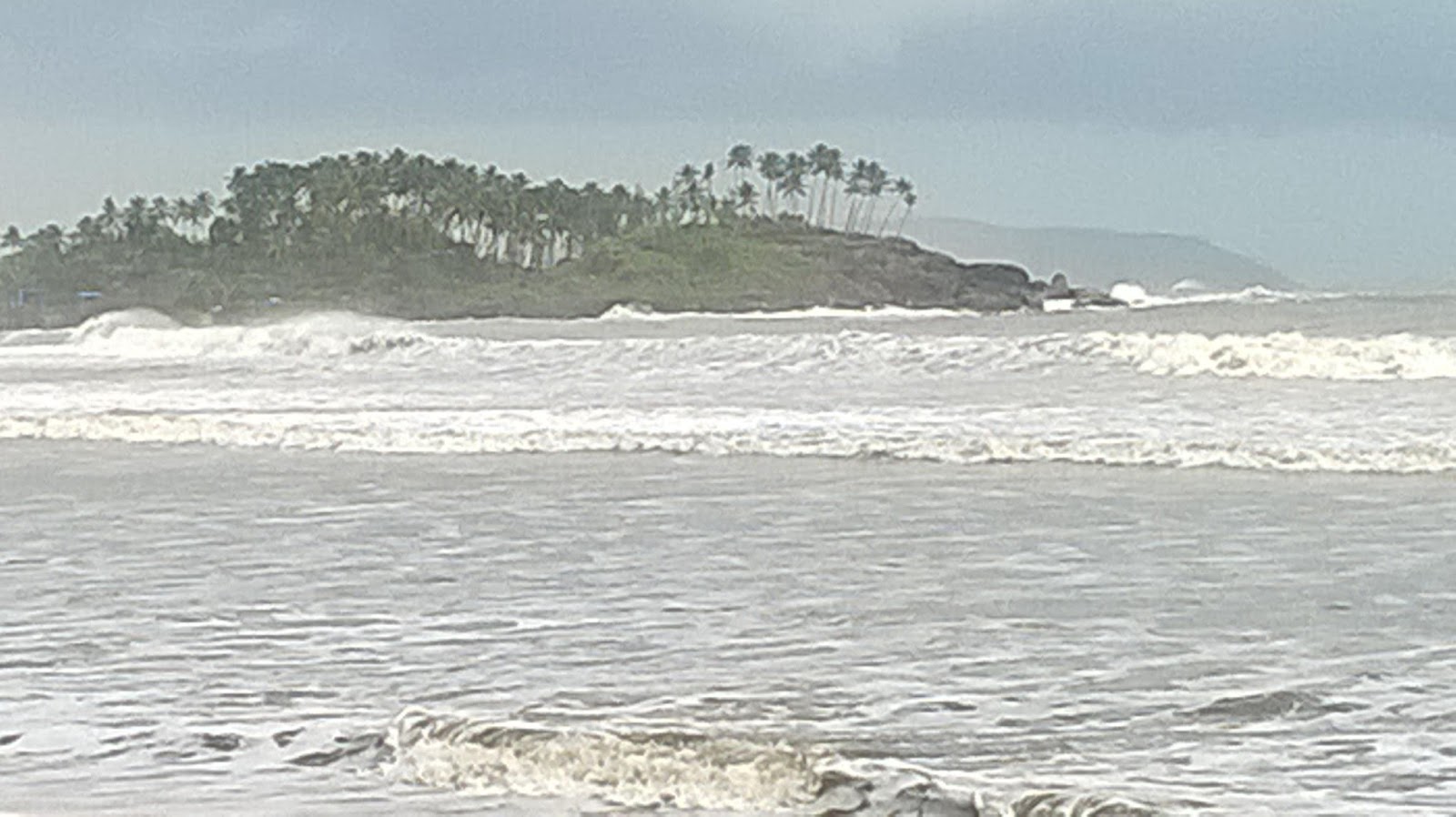
There was a restaurant on the beachside and the waves were rocking its door step. Monsoon was about to strike and the sea was showing its rough side. All sea activities were put to halt so we kept our adventure side to rest till our next visit. We stayed for four days but we never got bored walking on the beach, soaking ourselves or admiring the waves sitting on the sea-facing restaurant. One day while we were walking on the beach, some black sticky sand got stuck on our slippers my husband’s journalistic mind immediately started working. ‘Something is fishy’. Our guest house owner cleared our doubts. It is this time of the year when ships in high sea shed old grease which makes its way to the shores because of the rough waves. And this is why this is considered as an off season.
We also went to old Goa to have a feel of the majestic famous ancient churches of the city and experienced peace of mind sitting inside and admiring the statues of Jesus Christ and Mother Mary. We also went to Colva beach in central Goa which was little crowded and my husband asked me, ‘Are you feeling like Goa now?’ But somehow I liked the beach near our guest house more after the busy noisy Delhi. The free culture in Goa also amazed me, the local people were simple, traditional but were least bothered about what people wear or do and there was no eve teasing, which was so unlike Delhi. On our last day, monsoon struck Goa and it turned into a breezy hill station. We admired the continuous rain through our window panes, switching off our AC and fan. At last it was time to say bye Goa and with heavy hearts we packed our bags with a dream to spend our retirement in this small sleepy town near Palolem beach. No harm in dreaming right? As our return tickets were not confirmed, we again returned to Mumbai by train and from there we then took a flight to Delhi. Mumbai also attracts my husband a lot but I am somehow tired of shifting but can’t say what future has in store for us. At last we were back to hot and burning Delhi and read that monsoon was delayed. Welcome back to the grind!
Our travel plan
When we planned
our first Goa trip, we added Mumbai and Shirdi to our itinerary too. We boarded
the Sai Nagar special train from Delhi’s Nizammuddin station at midnight.
Passing through the ravines of Madhya Pradesh was a riveting experience. In Maharashtra,
we crossed banana and sugar cane fields. We reached Shirdi around 10.30 pm the
next night. The town had slept by then but there was a feeling of safety
despite the emptiness. We took an auto to the Maharashtra Tourism hotel right behind
the Sai temple. After a simple vegetarian fare, we went to bed early. If you
want to experience the morning aarti, which calms your spirit and mind, you
have to enter the temple before 4 am.
For the palki
procession, you have to stay in Shirdi on a Thursday. During his last
years, Sai Baba used to spend alternate nights at Chavadi, near Dwarkamai
mosque, from where the palki procession of Sai Baba along with his followers
was carried out. The procession happens even today on every
Thursday.
When in Shirdi, you can also visit the Shani
Shingnapur mandir, around 65 km away, by bus or taxi. Interestingly, this
village has no doors in any of the houses or shops. People here believe that
their Lord Shaneshwar is always present, protecting them from all the evils.
The Sai
Heritage Village in Shirdi showcases the major events that took place
during Sai Baba's lifetime in the form of statues.
Our next stop
was Mumbai and we took a train from Shirdi. In the morning, we moved into a
hotel near CST Station (the hub of Mumbai), which was rather expensive. There
are cheaper ones if you look around near Dadar and other places. Moving around
in Mumbai is always a smooth and a pleasant experience as taxis can be flagged
down anywhere, and they would religiously go by the meter.
Our Siddhivinayak,
Haji Ali darshan was smooth. We were disappointed when we reached Gateway
of India as it was barricaded because of the high tide. If there is low
tide, you can plan a boat ride in the seas nearby. Walking near the Taj or
riding a horse tanga is an amazing experience. We had piping hot tea from a
roadside vendor and hopped into a taxi for Girgaum Chowpatty.
The Bandra-Worli
sea link, flyovers at critical clog points, metro, the long elevated
freeway from CST to Chembur and wider roads have made commuting much smoother. The
airport also has a swanky look.
Our stay in
Mumbai this time was short as we had already lived in the city for three years.
There are many places to visit in the dream city: some of them are Marine
Drive, Essel World, Elephanta Caves, Sanjay Gandhi National Park, etc.
Finally, it was
destination Goa. We reached Madgaon (Margao) station by train, which was very
clean, and hired a taxi for Palolem in south Goa, where we had booked an apartment
at a guest house. The one-hour journey was breath-taking with greenery all
around.
The Palolem beach
was just two-minute walk away from our apartment. The beach was spotlessly clean
with very few people as we visited in the monsoons.
There was a
restaurant on the beachside, where we spent the time, glancing at and the waves
rocking its door step. We stayed for four days but we never got bored walking
on the beach, soaking ourselves or admiring the waves sitting on the sea-facing
restaurant.
If you are a party person you should stay in
north Goa.
We went to old
Goa to have a feel of the majestic famous ancient churches of the city, which
include The Basilica of Bom Jesus. Popularly
known as the St. Francis Xavier church, Se Cathedral, church of St. Francis of
Assisi, Catherine's Chapel and Augustine Tower.
Then there was
the capital of Panjim’s Latin quarter Fontainhas, full of snaky alleys and
colourful Portuguese villas with balconies and red-tiled roofs.
We went to the Colva
beach in central Goa, which was a little crowded, and the famous Mangeshi
Temple, which houses Bhagavan Manguesh, an incarnation of Lord Shiva, and the
spice market in Margao.
Other prominent
landmarks in Goa are the Reis Magos Fort, which offers stunning views of the
Mandovi river, Calangute, Baga, Agonda and Candolim beaches, Church of Our Lady
of the Immaculate Conception, Church of Our Lady Of Hope, the Saturday Night
market, and the local spice and fish markets.
The milky Dudhsagar
Falls on the Mandovi River is 60 km from Panaji by road and a must visit.
On our last
day, heavy rains hit Goa and it turned into a breezy, cold hill station. We
returned to Mumbai by train and from there took a flight to Delhi.
Follow my blog: Mixed Bag