Showing posts with label #travelwriter. Show all posts

Sunday, 13 November 2016

#Ganapatipule-- a jewel on the Konkan coast

Soaked in rains and greens in Ganapatipule

If you love the sea, then Ganapatipule is an ideal destination for a short trip. But we love the rains too, and so we opted for monsoon tourism. Do read our experience and our plan trip at the end.


For the last two years, we had been heading towards sea destinations for our summer holidays -- Goa and then Kerala. So, this year, we thought we would go somewhere near the hills but then we were not 100 per cent sure. So we tried of checking the availability of train tickets, as a train journey is the best when one wants to enjoy the abundance of nature. After some permutations and combinations, we realised the sea was beckoning us again. In the next 10 minutes, we got confirmed tickets to Ratnagiri in Maharashtra and from there we decided to go to Ganapatipule – a quiet but exotic seaside destination.
For the third time, we would be heading to the sea. I, my husband and my eight-year-old son were smiling ear to ear as we are all in love with the sea and that too in the monsoons. The first things to pack were umbrellas, raincoats and crocs– even though we knew we would be drenched to the bone and that we would love it. We applied for leave and after one month, we were in the train heading to our monsoon destination. We crossed tunnels, hills, plateaus, waterfalls, streams and we were glued to the windows to enjoy each second as we will miss such views at least for the next six months.
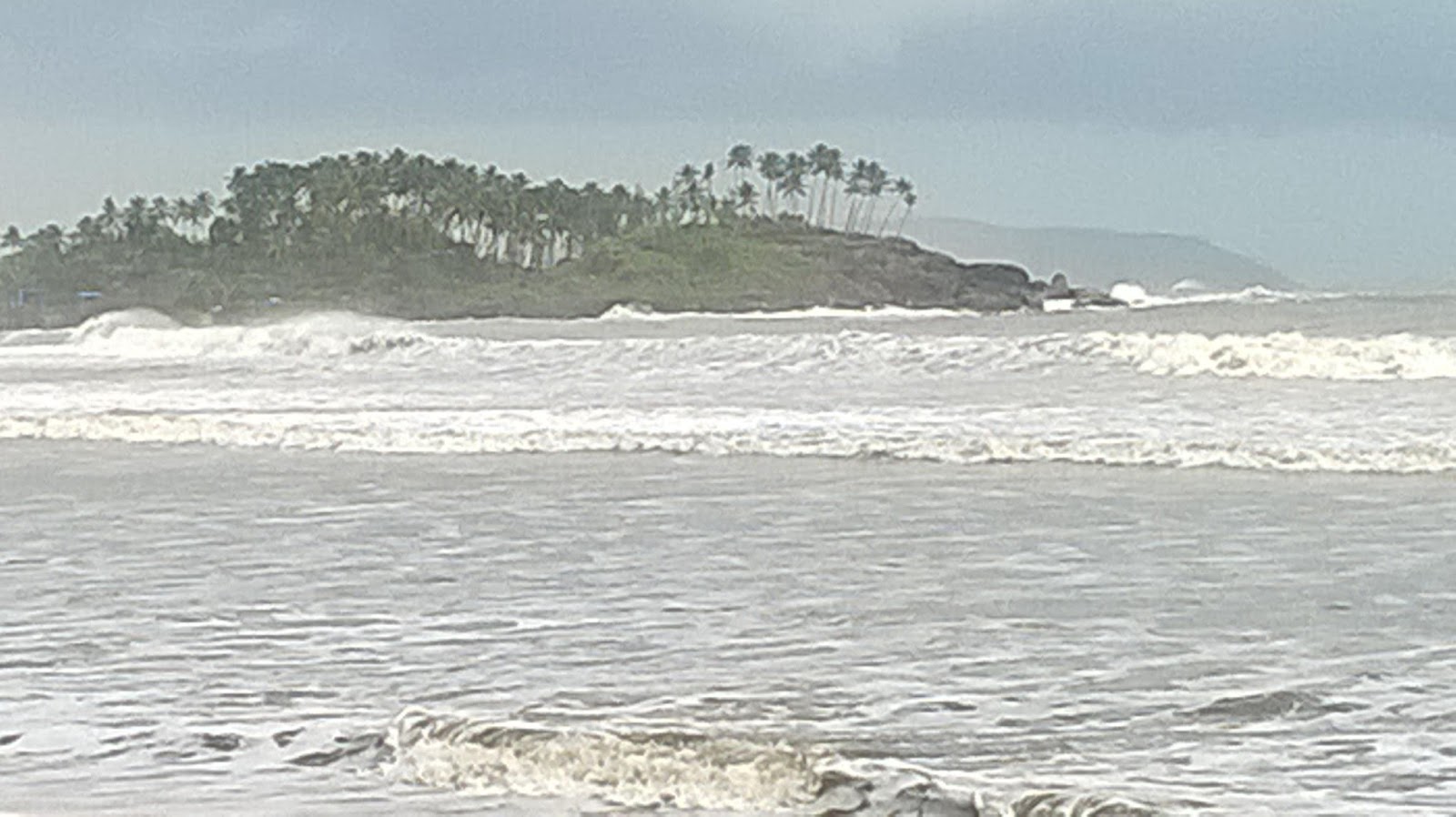
After a 28-hour journey by Rajdhani, we reached Ratnagiri, and after one-and-half-hour auto drive we reached Ganapatipule. The auto drive through the winding road and meadows was just amazing. In between the hills and village settlements, the view of the roaring and rocking sea from the top was just breath-taking.


We had booked a cottage in an MTDC resort in advance. We were amazed to see the huge campus with a walking track, a children’s park and space to sit. Down a few stairs was the sea beach. Our room faced the sea with a huge balcony. There were lines of coconut trees in between and then the endless sea. The constant sound of the waves was like magic to the ears – washing all our tension away.
We freshened up and went for lunch at the campus restaurant and had an amazing Maharashtrian fish thali. After satiating our taste buds, we could not wait to go down to the beach. There was hardly any crowd and there were rocks to sit and about a km away we could see the famous Ganapati temple after which the place was christened Ganapatipule.
That evening there was heavy rain and the moment it slowed, we took out our umbrellas and went out to explore the locality. There were lines of lounges and restaurants nearby and that night we had delicious vegetarian dinner with the amazing aroma of Konkani and Malwani masala.

Every morning and evening, our routine for those four days was go to the beach, stroll, enjoy the waves and just sit and sit on the rocks -- doing nothing. My son enjoyed getting wet and playing with the sand. We clicked pictures and selfies like we went crazy. The rains were so unpredictable there, when we went down to the beach the sky was clear and suddenly a few dark clouds would come from nowhere and pour like cats and dogs. But we went to enjoy the monsoon and we did every bit of it. Every day, we were soaked to our bones but we went back again and again. We had to switch on our room fan and AC to dry our clothes. And we had a blanket to warm ourselves.
We found a panchkarma massage centre within the campus. My husband relaxed with a body massage and I experienced shirodhara (head massage). The aroma and the warmth of the ayurvedic oil pouring drop by drop on my forehead was so relaxing, I felt all my stress vanishing. I would live there forever and never return to a polluted city like Delhi if I could. But that is why it is said holidays are short lived. It is always good to wait for holidays because once it arrives, it ends too soon.

On our last day, we visited the Ganapati temple. Due to the heavy downpour, there were very few devotees. There was no queue and we had our darshan and experienced the aura of peace in the temple campus. The laddoo prasad was divine. My son clicked pictures with the huge elephant and rat. When I told my sonny he can wish whatever he wants in rat’s ears, he immediately complied. We bought two torans as a memento of Ganapatiple from the temple lane for our home mandir entrance.
Even if we didn’t want to leave the place, we had to bid adieu to the astounding place. On our way back to the Ratnagiri station, we got down from the auto and clicked pictures from the hill top, which had amazing view of the sea below. We knew the holidays were over and we had to join office the next day but that could not stop us from planning our next holiday and that again brought smiles in our faces. This is what life is all about -- plan beautiful holidays and get charged to work for the next six months!

Our plan trip:

Train journey is the best when one wants to enjoy the abundance of nature. We took the Rajdhani Express from New Delhi to Ratnagiri in Maharashtra for our sea and monsoon destination, Ganapatipule.

Mumbai is 375 km away via Mahad, and Pune is 331 km away via Satara.

Essentials to pack: Umbrellas, raincoats, crocs, shorts, etc.

Enjoy nature in abundance: We crossed tunnels, hills, plateaus, waterfalls and streams.

After a 28-hour journey by Rajdhani, we reached Ratnagiri, and after an one-and-half-hour auto drive (around 30 km), we reached Ganapatipule. You can take a cab or bus too.

Buses are available from major cities such as Mumbai, Pune, Sangli, Kolhapur and Solapur.

Enjoy sea view throughout: The auto drive was just amazing. In between the hills and village settlements, the view of the roaring and rocking sea from the top was breath-taking. We enjoyed on the Bhandarpule beach for some time on the way.

Where we stayed

We had booked a cottage at an MTDC resort in advance. It has a huge campus with a walking track, a children’s park and space to sit. So you can maintain social distancing too. Down a few stairs was the sea beach (Ganapatipule beach). Our room faced the sea with a huge balcony. The beach was almost empty, giving a feeling that we were at our private beach.

Food:

We went for lunch at the campus restaurant and had an amazing Maharashtrian fish thali. Near the beach, there were rocks to sit and on the other end of the beach, a few hundred metres away, we could see the famous Ganapati temple (a must visit), after which the place was named Ganapatipule. The laddoo prasad at the temple is just divine.

There were lines of lounges and small restaurants nearby and that night we had delicious vegetarian dinner with the amazing aroma of Konkani and Malwani spices.

Stress-free in just four days; you can plan a two-day trip too

Every morning and evening, our routine for those four days was go to the beach, stroll, enjoy the waves and just sit and sit on the rocks -- doing nothing.

Enjoy massage:

We found a panchkarma massage centre within the campus. My husband relaxed with a body massage and I experienced shirodhara (head massage). The aroma and the warmth of the ayurvedic oil pouring drop by drop on my forehead was so relaxing.

Other places to visit:

*Different beaches: Ganapatipule, Arey Ware, Advika, Malgund, Bhandarpule

*Prachin Konkan Museum

*Magic Garden

*Shree Mahalakshmi’s House of Wax

*Jai Vinayak Temple

*Kavi Keshavsoot Smarak

You can take a bike on rent and roam around the town

At some points, scuba diving, para motoring, paragliding are also available

Nearby places (3-4 hours’ drive or a day’s trip)

*Jaigad Fort & Lighthouse

*Chiplun

*Ratnagiri city

*Kolhapur

*Guhagar Beach

*Vyadeshwar Temple

*Gopalgad Fort & Anjanvel Lighthouse

*Hedvi Ganesh Temple & Beach

*You can also hire a bike and ride the sea trail to Tarkali, another pristine beach, and further down to Goa.


Follow my blog: Mixed Bag

Thursday, 10 September 2015

East calling: Start with Bagdogra, Published in Maxposure group magazine 'Vistara'

East calling: Start with Bagdogra

Kakoli Thakur

If you have never explored east, you can always start with Bagdogra in West Bengal’s Darjeeling district. So the next time when you are tired of the hustle and bustle of your busy city life, visit this small town known for its serenity and tranquillity.

Located in the lap of the hills that lead to the mighty Himalayas, you can make Bagdogra the base and explore the exotic places around. The best part is the town has an airport that is well connected with Delhi, Mumbai, Kolkata and Chennai.


Kurseong: Sixty km from Bagdogra airport lies the sleepy hill town of Kurseong. Once there, you can hear the whistling sound of the steam engine and see the toy train slowly snaking its way through the mountains.

Kurseong is also known as 'The place of white orchids' due to the abundance of rare flowers. There are beautiful tea gardens, lush green forests and year-round vegetation on the slopes. From some parts of nearby Kalimpong, you get resplendent views of Mount Kanchenjunga, Kabru and Jannu. The sight of the rivers Teesta and Mahananda just takes your breath away. Kurseong is an ideal place for nature walks where you can enjoy a slice of rural life.

Animal lovers, don’t forget to visit the Deer Park and Dowhill Eco Park, about 4 km east. Spread across a green patch of about 20 acres, it has a sparkling water fountain, a flower house and a number of rare animal species. Trekkers will love the secluded stretches and the scenic views. It is named after deer as large numbers of the animal was found in the area before deforestation and poaching set in.


Mirik: About 55 km from Bagdogra airport, is another ideal destination. The main attraction is the 1.25-km Sumendu lake surrounded by Dhupi trees on the western bank and a vast garden on the eastern bank. A floating fountain in the middle and a quaint little footbridge that connects the flower garden on the eastern bank to the heavily forested ridge with thousands of Cryptomaria-Japanica trees on the west make it a tourist’s delight.

If you are lucky, you may see a rare reflection of the Kanchenjunga in the lake waters. There are points from where you can see Kanchenjunga’s blinding snow-white peaks. This place is surrounded by tea estates, orange orchards and cardamom plantations. Short treks from Mirik are also conducted.

If you want to just laze around, stay in the Swiss cottages on the hill top from where you can have a panoramic view of the lake and almost all of Mirik.


Rameetay Dara: An ideal spot to enjoy the sunrise and sunset, it is famous for the pristine view of the plains and snow-clad mountains of Mirik. The pleasant weather throughout the year is such a relief. At a short distance is Kawlay Dara, known for the misty mountains. This peak provides a spectacular view of the lush green flora of the Himalayas.

Tourists can enjoy trekking, leisure walks or mountain climbing at these places. A number of interesting places are located in the vicinity of Kawlay Dara like Singha Devi Temple and Deosi Dara.


Deosi Dara: Located 1768 m above sea level, it is a perfect destination for nature lovers with a panoramic view of the Mirik Valley and is a heaven for photographers. Surrounded with emerald green pine trees and lush green jungles, it is popular among local picnickers too. Away from the polluted cities, one can enjoy the lovely sunrise and sunset.


Mahananda Wildlife sanctuary: Half an hour away from Bagdogra lies the sanctuary located between the Mahananda and Teesta rivers.

If you drive straight down the main forest road, you will reach the banks of the Mahananda. Regular day safaris are offered in the sanctuary from the Sukna gate in the morning and afternoon. But you need to take your own car, preferably a big one, and return before dusk.

If you are lucky, you can even spot Royal Bengal Tigers. Some 36 different species of mammals approximately exist, including Himalayan black bear, leopards, rare mountain goats (serow), etc.

A haven for bird watchers, there are approximately 243 different species of birds, including Himalayan pied hornbills, peafowls, racket tail drongo, etc.

Several watch towers have been set up: one in Laltong on the Teesta river bank, astounding for watching elephant migration; another has been created in the Gulma railway station using a train's cabin and is used to watch deer, Indian bison, etc.


Gorumara National Park: Located on the flood plains of Murti and Jaldhaka rivers, Gorumara is famous for the Asiatic one-horned rhino. Just two hours from Bagdogra, the meandering ride to Gorumara through tea gardens is just splendid.

Tourists can go for jungle safari to have a sight of elephants, rhinos, Indian bison (gaur), etc. You have to book forest safari with the forest department and take an authorised guide along to the watchtowers. Trespassing is illegal and can be dangerous. The common safaris include the Jatraprasad, Methla, Chukchuki, Chandrachur and Chapramari watchtowers.

Visitors need to obtain a special permission to enter its interiors. The Gorumara national park has approximately 48 species of carnivores and herbivores, 193 species of birds, 22 of reptiles, 7 of turtles, 27 species of fishes, etc. Birds include minivets, pheasants, hornbills, etc. During winter, migratory birds including the brahminy duck, ibis, teals, etc., can be seen. The night hunters are the owls and the nightjars.


Access points

From Bagdogra Airport, it is easy to explore West Bengal’s hills (Darjeeling, Kalimpong, Chalsa, Dooars etc.) and Sikkim (Gangtok, Pelling, North Sikkim etc).

Another plus point is, the airport also has direct flights from Paro (Bhutan) and Kathmandu (Nepal). The nearest railhead is New Jalpaiguri.


Attractions in Bagdogra

Bagdogra is very rich in culture and tradition. The best season to visit is October to March. Some of the major festivals include Gangasagar Mela, Kenduli Mela, Jalpesh Mela and Naba Barsho.

Naba Barsho is observed as the New Year according to the Tibetan calendar and is celebrated with great zest.

You can also spend a day in local sight-seeing and visit the Kali Mandir, HYPERLINK "http://www.holidayiq.com/ISKCON-Temple-Bagdogra-Sightseeing-773-9460.html"ISKCON Temple, Science City, Coronation Bridge, Surya Sen Park, Salugara Monastery, HYPERLINK "http://www.holidayiq.com/Madhuban-Park-Bagdogra-Sightseeing-773-9461.html"Madhuban Park, HYPERLINK "http://www.holidayiq.com/Savin-Kingdom-Bagdogra-Sightseeing-773-9463.html"Savin Kingdom, HYPERLINK "http://www.holidayiq.com/Umrao-Singh-Boat-Club-Bagdogra-Sightseeing-773-9455.html"Umrao Singh Boat Club.


Exploring Bagdogra


Monday, 8 December 2014

What to see in Shirdi, Mumbai and Goa

Coastal sojourn 
       
   When you think of western India, you cannot escape Shirdi, Mumbai and Goa. We did the same when we planned our first Goa trip, we added Shirdi and Mumbai in our itinerary too. Do read our plan trip at the end


Two years back we missed our Pondicherry trip as we could not confirm our railway tickets till the last moment. So this year, we planned our trip much in advance. First we zeroed in on Goa and then we added Mumbai to our itinerary. Then we thought, if Mumbai why skip Shirdi? We tried to book our train tickets exactly two months in advance but in spite of that, our tickets from Delhi to Shirdi, and Goa to Delhi landed in the waitlist. But as we were in the first 10, we thought no issues. But till the last moment, our position did not move even one seat forward. And on the last day, we were waiting with our bags packed and bated breath for the tickets to give us green signal. Exactly two hours before the train’s departure, we got to know that actually our trip was actually on. By then we were already thinking of alternative destinations. Everybody who knew about our trip were advising us about ‘positive affirmation’ and that if Sai Baba wants, we would definitely go as our first destination was Shirdi.

But we almost missed our train, we thought it was scheduled for 12 noon on the 9th of June but actually it was 12 midnight between 8 and 9. Luckily, we noticed the timing 00:00 hours just hours before and we couldn’t stop laughing. When my mom-in-law heard about it, she too said: ‘How can you not spot 00 hours’. She once missed the train because of the same confusion, so she sounded more cautious now.

At last, we were waiting for our Sai Nagar special train at Nizammuddin station at midnight. The train got little late but it was okay, as at last our journey started. Since it was only a five minutes halt, we caught the train in DDLJ style and our six-year-old son found it very funny. Throughout the journey we got to hear tales of Sai from our co-passengers as how their belief on Baba got stronger. Passing through the ravines of Madhya Pradesh was by itself a riveting experience. As we entered Maharashtra, we passed through banana and sugar cane fields and we got busy showing our son the humble living of villagers. We entered Shirdi dot on time, may be with Baba’s blessings. Though it was 10.30 pm, there was a feeling of safety and there were no touts around. We got an auto and we reached the Maharashtra tourism hotel exactly behind the Sai temple and as luck was on our side, we got a good room too. We did not miss dinner just by few minutes. After a simple vegetarian fare, then we set our alarm clock for 4 am and within seconds we were in deep slumber. We reached the temple premises at 5 am but the queue was already endless, as if people started pouring in since midnight. After two long hours in queue, we had our Sai darshan. Everything was smooth except for a few overenthusiastic devotees who tried to bypass others, the security guards who did not allow us to stand near Baba’s statue even for five seconds, and the pujaris who did not even put our flowers on Baba’s feet. The two days in Shirdi were over-relaxing as we had nothing much to do except for our evening stroll, street food and observing people.

Our next stop was Mumbai and we boarded our train on time. This time, we decided to skip bus journeys as trains are always better and less tiring. Our co-passengers were decent Keralittes and we heaved a sigh of relief. Around 9.30 pm, we thought of slumping into our berths as there was nothing much to do. Suddenly one man came from nowhere and said he had a berth in our compartment. He argued that it’s in the railway rule book that we cannot sleep before 11 pm and we should let him and his friend sit. We protested and told him that he cannot bring an extra passenger even if he has a single berth in a reserved compartment. He tried to raise his voice and give a different logic but we knew we were right so we did not give up and he had to give up his ‘itna to chalta hai’ attitude. Later we got to know that he was without ticket and shifted to a different train with his grumpy face, maybe he faced a protest of this sort for the first time. He surely would remember this for quite some time. It was a small triumph for us and we were all smiling from ear to ear.

In the morning, we moved into a hotel near CST (the hub of Mumbai) but as the check-in, check-out timing was 12 noon, we had to pay for an extra day. The charges were quite high but the room was not even decent. Moving around in Mumbai, unlike in Delhi, is always a smooth and pleasant experience as taxis can be flagged down anywhere, they would seldom refuse passengers and would religiously go by the meter.

 Our Siddhivinayak, Haji Ali darshan was smooth without much crowd. We were disappointed when we reached Gateway of India it was barricaded because of the high tide. We planned a boat ride in the seas like we used to do when we were Mumbaikars a few years back, but everything was closed due to the high tide. As we were walking near the Taj, a huge wave left us all wet, washing away all our tiredness. We had hot tea from a roadside vendor and hopped into a taxi for Girgaum Chowpatty. The sea made me forget all my worries. People from even conventional background were seen soaking their feet, enjoying the waves -- some even bathing, leaving all their tensions behind. Mumbai has two sides like a coin -- one that was in front of us and the other we see in movies.

A lot has changed in Mumbai since we left the city six years back. The Bandra-Worli sea link, flyovers at critical clog points, metro, the long elevated freeway from CST to Chembur and wider roads have made commuting in the congested city much smoother. But it was the swanky new airport that left has awestruck.

Finally, it was destination Goa and I was busy dreaming the Goa scenes that we see in glamorous Bollywood movies. After we reached Madgaon station, we hired a taxi for south Goa. The one-hour journey was breath-taking with greenery all around with beelines of coconut trees and we inhaled as much oxygen as we could. It somehow resembled my home state Assam as the small towns back there have a similar landscape.

My husband then explained me the theory that this region and Assam was once part of the land mass millions of years ago but due to constant changes during the formative stages of earth both the regions got separated, but the climate and landscape remained the same.

After the hotel in Mumbai had left a bad taste, when we climbed up the stairs to our guest house room, we were a little sceptical. As we entered the room, we were left amazed. With a huge balcony and a studio apartment look, it made us more satisfied. The beach was just two-minute walk away and in fast forward mode, we freshened up and headed towards Palolem beach. I could not believe my eyes as we entered the beach. The water was crystal clean along with the beach and there was hardly any crowd. My first question was, ‘Is this Goa?’ My husband smiled and asked ‘Why?’ I said, “The Goa I have seen in movies and heard from friends is supposed to be ‘hot and happening.’” But the place was just the opposite with simple living and helpful people all around and a very few tourists. His simple explanation was: “You have come to enjoy the beach, just do that. We are lucky that not many people have yet explored this place.”

There was a restaurant on the beachside and the waves were rocking its door step. Monsoon was about to strike and the sea was showing its rough side. All sea activities were put to halt so we kept our adventure side to rest till our next visit. We stayed for four days but we never got bored walking on the beach, soaking ourselves or admiring the waves sitting on the sea-facing restaurant. One day while we were walking on the beach, some black sticky sand got stuck on our slippers my husband’s journalistic mind immediately started working. ‘Something is fishy’. Our guest house owner cleared our doubts. It is this time of the year when ships in high sea shed old grease which makes its way to the shores because of the rough waves. And this is why this is considered as an off season.

We also went to old Goa to have a feel of the majestic famous ancient churches of the city and experienced peace of mind sitting inside and admiring the statues of Jesus Christ and Mother Mary. We also went to Colva beach in central Goa which was little crowded and my husband asked me, ‘Are you feeling like Goa now?’ But somehow I liked the beach near our guest house more after the busy noisy Delhi. The free culture in Goa also amazed me, the local people were simple, traditional but were least bothered about what people wear or do and there was no eve teasing, which was so unlike Delhi. On our last day, monsoon struck Goa and it turned into a breezy hill station. We admired the continuous rain through our window panes, switching off our AC and fan. At last it was time to say bye Goa and with heavy hearts we packed our bags with a dream to spend our retirement in this small sleepy town near Palolem beach. No harm in dreaming right? As our return tickets were not confirmed, we again returned to Mumbai by train and from there we then took a flight to Delhi. Mumbai also attracts my husband a lot but I am somehow tired of shifting but can’t say what future has in store for us. At last we were back to hot and burning Delhi and read that monsoon was delayed. Welcome back to the grind!

Our travel plan

When we planned our first Goa trip, we added Mumbai and Shirdi to our itinerary too. We boarded the Sai Nagar special train from Delhi’s Nizammuddin station at midnight. Passing through the ravines of Madhya Pradesh was a riveting experience. In Maharashtra, we crossed banana and sugar cane fields. We reached Shirdi around 10.30 pm the next night. The town had slept by then but there was a feeling of safety despite the emptiness. We took an auto to the Maharashtra Tourism hotel right behind the Sai temple. After a simple vegetarian fare, we went to bed early. If you want to experience the morning aarti, which calms your spirit and mind, you have to enter the temple before 4 am.

For the palki procession, you have to stay in Shirdi on a Thursday. During his last years, Sai Baba used to spend alternate nights at Chavadi, near Dwarkamai mosque, from where the palki procession of Sai Baba along with his followers was carried out. The procession happens even today on every Thursday.

When in Shirdi, you can also visit the Shani Shingnapur mandir, around 65 km away, by bus or taxi. Interestingly, this village has no doors in any of the houses or shops. People here believe that their Lord Shaneshwar is always present, protecting them from all the evils.

The Sai Heritage Village in Shirdi showcases the major events that took place during Sai Baba's lifetime in the form of statues.

Our next stop was Mumbai and we took a train from Shirdi. In the morning, we moved into a hotel near CST Station (the hub of Mumbai), which was rather expensive. There are cheaper ones if you look around near Dadar and other places. Moving around in Mumbai is always a smooth and a pleasant experience as taxis can be flagged down anywhere, and they would religiously go by the meter.

Our Siddhivinayak, Haji Ali darshan was smooth. We were disappointed when we reached Gateway of India as it was barricaded because of the high tide. If there is low tide, you can plan a boat ride in the seas nearby. Walking near the Taj or riding a horse tanga is an amazing experience. We had piping hot tea from a roadside vendor and hopped into a taxi for Girgaum Chowpatty.


The Bandra-Worli sea link, flyovers at critical clog points, metro, the long elevated freeway from CST to Chembur and wider roads have made commuting much smoother. The airport also has a swanky look.

Our stay in Mumbai this time was short as we had already lived in the city for three years. There are many places to visit in the dream city: some of them are Marine Drive, Essel World, Elephanta Caves, Sanjay Gandhi National Park, etc.


Finally, it was destination Goa. We reached Madgaon (Margao) station by train, which was very clean, and hired a taxi for Palolem in south Goa, where we had booked an apartment at a guest house. The one-hour journey was breath-taking with greenery all around.


The Palolem beach was just two-minute walk away from our apartment. The beach was spotlessly clean with very few people as we visited in the monsoons.


There was a restaurant on the beachside, where we spent the time, glancing at and the waves rocking its door step. We stayed for four days but we never got bored walking on the beach, soaking ourselves or admiring the waves sitting on the sea-facing restaurant.

If you are a party person you should stay in north Goa.

We went to old Goa to have a feel of the majestic famous ancient churches of the city, which include The Basilica of Bom Jesus.    Popularly known as the St. Francis Xavier church, Se Cathedral, church of St. Francis of Assisi, Catherine's Chapel and Augustine Tower.


Then there was the capital of Panjim’s Latin quarter Fontainhas, full of snaky alleys and colourful Portuguese villas with balconies and red-tiled roofs.


We went to the Colva beach in central Goa, which was a little crowded, and the famous Mangeshi Temple, which houses Bhagavan Manguesh, an incarnation of Lord Shiva, and the spice market in Margao.


Other prominent landmarks in Goa are the Reis Magos Fort, which offers stunning views of the Mandovi river, Calangute, Baga, Agonda and Candolim beaches, Church of Our Lady of the Immaculate Conception, Church of Our Lady Of Hope, the Saturday Night market, and the local spice and fish markets.

The milky Dudhsagar Falls on the Mandovi River is 60 km from Panaji by road and a must visit.

On our last day, heavy rains hit Goa and it turned into a breezy, cold hill station. We returned to Mumbai by train and from there took a flight to Delhi.


 Follow my blog: Mixed Bag