Showing posts with label #mixedbag. Show all posts

Sunday, 12 February 2023

Why the Gauhati Super Speciality Hospital is a ray of hope for many-- published in EastMojo

Published in EastMojo 

https://www.eastmojo.com/news/2023/02/13/why-the-gauhati-super-speciality-hospital-is-a-ray-of-hope-for-many/

Stories of optimism and determination amid the gloomy atmosphere from Assam’s biggest healthcare facility

Last month, due to a family health emergency, I had to stay at the new Gauhati Medical College Super Speciality Hospital for around a fortnight as an attendant. This stay was my first such experience. Before that, I have been to hospitals to pay visits to different people I knew — with fruits or bouquets or ‘get well soon’ cards. I too had stayed at a nursing home when my son was born but that was a happy occasion. 

This stay changed my perspective about life. I realised how blessed I was to stay at a hospital just as an attendant and not as a patient. At least I was free to take a walk or go home to freshen up or rest at home for a night when someone else came to relieve me.
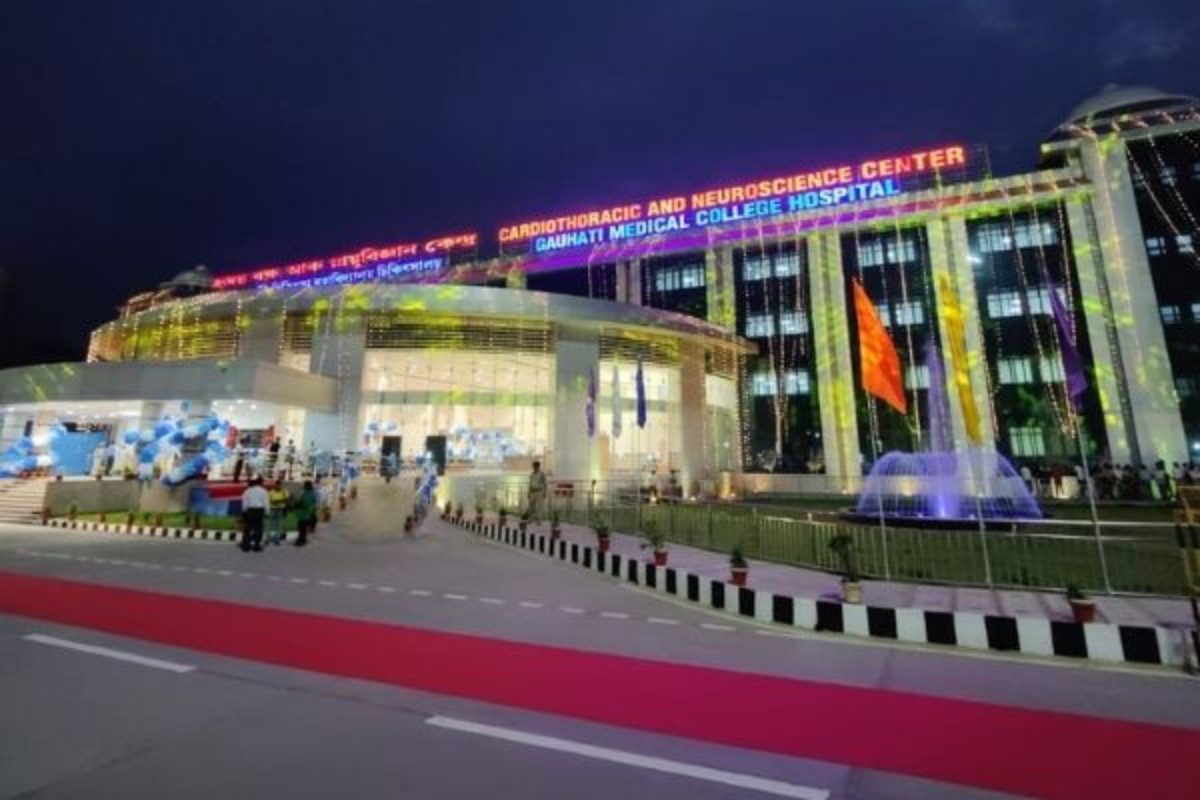


This was a nephrology ward at the new campus, as my dear one was a kidney patient. It was a general female ward with patients from different backgrounds and age groups. The youngest patient was hardly 10 years old. The mere thought of her cries in agony still gives me shivers. Whenever she cried, there was pin drop silence in the whole ward.

The senior doctors would come on rounds once a day but the junior doctors were on their toes throughout the day, monitoring patients, taking updates and advising attendants. Once the new campus is fully operational, the cardiology, neurology, cardiac surgery and neurosurgery departments will be shifted there from the old Gauhati Medical College and Hospital (GMCH) building on the other side of the road.

Breathlessness is a common symptom among kidney patients. Most of the patients had to be on oxygen for the first two-three nights. The feeling of helplessness — just watching, not able to do anything — when a person in front of you is not able to breathe, and feeling relieved once oxygen support is given, can’t be expressed in words.

I have seen patients spending nights just sitting — putting their head down on a side table as lying down aggravated their breathing problem. One of the patients was so serious that she had to be shifted to the ICU.

Another patient was diabetic with high pressure. Her daughter-in-law was a nurse at some other hospital. The patient shared how they grow everything in their own farm but she can’t eat anything as her daughter-in-law is too strict, and serves her just a little rice and moong dal all the time — maybe out of concern or fear. But sometimes we should think from the patient’s perspective too and give them something variety to eat, albeit healthy.

The nephrology ward was maintained very well. Twice a day, the cleaners would sweep and mop the floors, something hardly seen in government hospitals. But the toilets were pathetic, and it was not the fault of the cleaners. The toilets were also cleaned twice. It was the attendants who were at fault this time. Though there was an ample supply of water, very few would flush properly. There were separate bathrooms with a warm water facility. But the attendants would use the space to wash utensils. Most of the time, the wash basins would be blocked with food leftovers. And sometimes they would use the bath space for other uses also.

I would really salute the junior doctors who would work diligently from 8.30 am for almost 10-12 hours, taking care of each patient of the ward. Even the nurses were on their toes — some of them though would get irritated with small things, but some were sweet. I understand their job is tiring but they should also not forget their job is to serve with love and compassion.

Dialysis is a procedure to remove waste and excess fluid from blood when the kidneys stop working properly. It often involves diverting blood to a machine to be cleaned. It’s a room of hope: as at least with the help of a machine, a patient’s symptoms would improve, especially the appetite to consume something.

Outside the waiting space at the dialysis room, often there were simple village people who felt lost in that atmosphere. I felt content helping them with simple things like approaching the doctor, taking a patient to the dialysis room, forwarding reports on WhatsApp, etc. An elderly in-patient came with her son so I helped her change her clothes. When she was discharged, she touched my head and blessed me. It brought tears to my eyes, I felt so happy.

Once I had to go to the GMC old building for my patient’s hand fistula check-up. A ward boy helped us, going out of the way. Seeing the unhygienic condition there, I just wished it was also maintained like the new campus. The old building is like a labyrinth but there are help desks to help people lost in the maze.

Usually I was busy with my patient during day time — taking her for tests, dialysis etc. But the rest of the time, I was busy observing people, especially some stories of hope amid the gloom.

A teenager who cleared her medical entrance was on dialysis. She was waiting for a kidney transplant from her mother. Her parents were staying with her at the hospital and it was their home for months. The girl is so determined to become a doctor that she said she would let her mother give her a kidney only on the condition that she allows her to sit for the medical entrance again. But her mother didn’t want that. She thought if her daughter takes stress, her blood pressure would again shoot up — which is another cause of kidney damage.

Then there was a folk singer who was admitted for a long time for her urinary tract infection. Determined to go back to stage, she asserted that even with this health condition, she could sing. She said she would just need a chair as standing and singing won’t be possible any more. Later, when she was being shifted to the urology ward, just two floors above, everybody bid adieu to her as if someone from the family was leaving. Yes that ward became a mini family for everyone — a home away from home.

Early in the morning, I used to go out to bring black tea, roti and sabji for my patient and would observe how people rose so early to earn their livelihood, selling fresh breakfast. As the day progressed, I had to go out to buy medicines — at times from the pharmacies outside the campus. I saw how the medical college had become a source of earning for many and how an entire ecosystem had sprung up in its surroundings. There were rows of street kiosks and permanent shops selling different things attendants would need for their patients — fruits, warm water, water bottles, blankets, floor mats, buckets, stools, etc. 

A newly married girl shared her helplessness as her mother didn’t know that she was a kidney patient and had heart problems too. So she was unable to convince her mother for dialysis. The day we were given discharge, we counselled her mother giving our example. We explained how dialysis would improve her health and that she would even be discharged soon.

Thanks to the Almighty, my patient is better now and is at home. On the day of release, I felt such government hospitals are a blessing for people of all backgrounds, especially when people suffer from diseases where lifelong treatment is required. I just hope that our governments, both at centre and states, make more such affordable healthcare centres, as most private hospitals, if not all, are just turning out to be money-making machines.  

Why the Gauhati Super Speciality Hospital is a ray of hope for many

Tuesday, 12 April 2022

Want to improve your English? Don’t depend too much on writing apps --East Mojo


Published on East Mojo in April 12, 2022

Want to improve your English? Don’t be over-dependent on writing apps

The jury is still out on the efficacy of grammar-checkers. While some feel there’s no harm in using them, there is unanimity in one fact — if you want to improve your English, you have to get your basics right

Most of you must have noticed the writing and grammar suggestions your email composer or word processor offers when you start typing a mail. These are just two examples of the myriad of English writing apps available out there—offering services such as grammar-check, spell-check, writing styles, and vocabulary and syntax suggestions.

Some may find them irritating but there are many who firmly believe or are even confident that these apps would help them improve their English language skills and grammar.


So the million-dollar question is — do these apps really help and if so, to what extent? Experts say while they may help you detect typos and errors, or even offer alternatives and suggestions, you won’t really get your English grammar and language right unless you are thorough with your Wren and Martin and well-read at the same time.

Learning a language doesn’t happen in one day; it’s a process. The more you read and write, the more refined will be your language skills, the experts say.

Then there are others who feel there are people who may not be strong in the English language and so there is nothing wrong if they use such a facility to correct their mails and communication.

All experts are, however, unanimous in stating that over-dependence on these apps won’t do any good.

Sajni Mukherji, a former Professor of English at Jadavpur University, finds such apps irritating and prefers to stay away from them.

“I am conservative and don’t believe in the efficacy of these apps, which automatically without my asking correct my spellings as I send messages or write letters on the phone. And it is usually wrong because they are assuming something and I want to say something completely different,” Mukherji says.

“I would rather do it myself because I think my English is good enough for grammar or spelling or for rearrangement of a sentence. I think I can do it much quicker and better myself.”

Mukherji says such suggestions obstruct the flow of writing when you want to write a creative piece. “I think ‘O good Lord’, I didn’t say that, so why is it saying that? I get very angry and so frankly I don’t like spell or grammar check by apps on phone or computer. I prefer to do it myself.”

Some well-known apps are Gammarly, ProWritingAid, Linguix, Writer.com, Beewriter, Scribendi, WhiteSmoke, Sapling, Slick Write, After The Deadline, Hemmingway, etc.

Grammarly is used for checking grammar and plagiarism. It offers numerous writing styles, suggestions for grammar, vocabulary and syntax.

At the same time, Mukherji feels such apps could be useful for people who have a problem with writing in English or with spellings and so on.

Mukherji thinks these apps are too mechanical and the best way to make sure that one doesn’t make mistakes in grammar or spelling is to read a lot of good books so that there is much less likelihood of making any mistakes.

“I have taught for so many years. When I found somebody making too many spelling mistakes, I would say to him/her ‘I want you to read one chapter of something very carefully and I will ask you the spellings afterwards.’ I pressed upon them that they have to read carefully and keep their eyes wide open so that they don't make spelling mistakes.”

Mukherji says if somebody corrects her grammar, then she would want to know the reason why he or she corrected it. “And usually it’s not the reason that convinces me. But I guess if people need it, they need it, that’s their requirement. I don’t want to say don’t use them at all. But I wouldn’t and I won’t recommend them to people either,” Mukherji said.

How reliable are such apps?

ProWritingAid says it checks grammar, readability and plagiarism-related issues. It offers a detailed report on all grammar errors, runs a readability analysis, allows you to test how easy it is to read and understand your draft and provides a thesaurus for word suggestions.

KV Sridhar (Pops), Global Chief Creative Officer, Nihilent Hypercollective at Nihilent Limited, feels it is okay to use them if they make your work faster. But when it comes to professional writing, one has to learn the language from the beginning.

 “Technology provides you with clues to check grammar, spelling, etc. It is far more accepted today in any word document. We have been using it for a very long time. The predictive nature of computer intelligence allows you to type even WhatsApp messages with a bit of prediction. Today 90% of Wikipedia is not done by human beings but by bots. So technology is helping people. But I am not talking about professional writers,” said Sridhar.

A lot of content today is written by machine and not by human beings and so taking the help of technology is accepted now. “Earlier, if you didn’t know how to form a sentence, or a sentence was grammatically wrong, people used to curse you and correct it. Today, even in newspapers or spoken English if the grammar is wrong, people forgive them,” Sridhar says.

Today, even if something is not written in proper English, it is accepted but earlier it was not the same.

“On Twitter, famous people or celebrities write using auto correct. Earlier, grammar Nazis used to spot mistakes. It was quite a rage. The old school people from, say, Hindu and Statesman, who subscribe to the right language, used to get annoyed by celebrities not writing in the proper language. It was quite a phenomenon then but later they gave up because in the ocean of words, which is moving so quickly, nobody can hold anything.”

All these apps, including Microsoft Word, give spell check, grammar, and predictive writing indication, which help you do your job a little better and quicker, Sridhar explained. He thinks it’s far more advisable to run a grammar and spell check in a piece of content or article than going through it alphabet by alphabet, word by word or sentence by sentence as we are living in a LIVE world.

“In a way you can call it laziness or incompetence. But on the other side it is agility, convenience and precision. You may make mistakes but computers don’t. Often if you don’t set the language, whether it is British English or American English you may face inconsistency in the way you spell or frame sentences or use certain words. But if you set all your parameters right and take the help of any of these tools, its fine for me. It is okay to take the help of technology to do anything better. It is always a good thing,” said Sridhar.  

But to learn the language and to frame sentences to express your ideas better; you have to learn it from the beginning, from school.

“If you are a professional writer, you have to be extra cautious and should know the language well. Learn it properly, and then take the help of technology because the pace at which you are working today is much faster then what it used to be 20 or 30 years ago,” added Sridhar.

Elaborating on his argument, Sridhar said that today if a person doesn’t respond on WhatsApp, you wonder what happened and within two seconds you move on. It is the same with Twitter, where three minutes is the time to respond. If a company or brand doesn’t respond within three minutes, a brand or company is not excused.

Choice of words on the computer will be a little advanced and appropriate words help you to express your thoughts better or the personality of your writing style. And this is where technology helps. “You just need to use it wisely and judiciously,” Sridhar says.

Sridhar says human voice is coming in a big way and who knows tomorrow spoken English would be converted into proper English by the computer and sent across, which is fine because you need to express your thoughts.

Thoughts and ideas are far more important than the play of words, he says. “Responding quicker is far more important than writing proper English. If auto correct can correct two or three things, it is fine. Running a grammar check before sending a mail to someone in a split second is far more appreciative than not sending or sending it the next day,” Sridhar said.

Linguix is said to be an AI-based writing assistant and a grammar checker tool that helps you to check real-time errors. It provides alerts and recommendations for grammar and punctuation. It allows you to copy-paste your existing text and provides alternative words and phrases and spelling corrections. It eliminates poor phrase and sentence structures and typos.

Benita Sen, a journalist, editor, children's author and creative writing teacher, feels such apps are shortcuts. “If you want to learn the grammar, is there any shortcut to learning the rules and then using them? I doubt that. Unless you learn correct usage, you will be app-dependent for far longer than you need to be. I advise my students to read books on grammar. My favourite is, Eats Shoots and Leaves.”  

But don’t these suggestions hamper the spontaneity of a writer? “It would not hamper the flow of thoughts if you decide to write come what may, and then put the completed piece through the checker,” added Sen.

If you are bound to use some app, do some research about its veracity. “I would do some background research if I have to fall back on an app. I have been teaching creative writing to students in India and abroad. I would not suggest that my students trust any app blindly. If the app makes a suggestion, look up the context of the suggestion before incorporating it. Nuances may be lost if we leave all our writing to AI,” added Sen.

The Writer.com grammar corrector tool claims it helps keep content quality consistent by providing brand-specific feedback. It enables you to build a custom style guide. You can check the content according to your company’s style guide and enable you to turn on/off different types of writing suggestions.

These artificial intelligence-based grammar-checking apps come in handy in finding missing articles or punctuations or errors but one should never be over-dependent on them definitely not to learn and improve English or grammar, feels Nilutpal Thakur, a senior journalist.

Many such apps make unnecessary suggestions, and so it’s not good to follow them blindly, he says.

“These are not learning tools, they are reviewers. Anyway, a review suggested may or may not be always correct because they are based on algorithms and artificial intelligence. They do not recognise complex sentences and those with multiple clauses. They may suggest alternative sentences and words that may have different, nuanced meanings,” Thakur added.

Many experts explained that people who use these apps do not actually get to the bottom of why artificial intelligence may have suggested a change. So they tend to blindly correct a sentence without understanding their mistake and forget about it the next moment. And this is not helpful because they are not learning from their mistakes.

So if you want to be a better writer in English, learn the language from the beginning and read more because no app can help you much, besides finding errors here or a typo there.  

 The writer is an independent journalist and video content creator based in Delhi-NCR. Runs a YouTube channel Think Positive: Live Healthy. 

Want to improve your English? Don’t depend too much on writing apps 


Monday, 21 March 2022

India’s mainstream entertainment scene & the rarely seen northeast faces--- East Mojo


Published in East Mojo on March 21, 2022

Why northeast faces are rare in India’s mainstream entertainment scene

Spotting a northeasterner in Hindi cinema, ads or OTT is like looking for needle in a haystack. Though things are changing for good, a lot more needs to be done

There is no dearth of good movies and actors from the northeast but even then, there is not much representation of the region in mainstream Indian movies, television and even ads. Northeast language films are also mostly missing from leading OTT platforms. And although things are changing gradually and slowly, it is a long road ahead, feel cine makers from the region.

In recent times, besides a few examples such as Andrea Tariang in Pink, Karma Takapa in the Amazon Prime Series ‘The Last Hour’ or Chum Darang in ‘Badhaai Do’ — and names such as Seema Biswas and Adil Hussain — one hardly encounters a character or actor from the northeast in popular Indian entertainment.


The movie 'Mary Kom', based on the life of the ace boxer from Manipur, would have looked more convincing had there been a face from the northeast instead of Priyanka Chopra, though Chopra did a good job.

“Mainstream Hindi cinema, unfortunately, follows the logic of ‘saleability’ over ‘credibility’. That is why in the film Mary Kom, an actress was cast who looks nothing like an ethnic northeastern person of what is known as ‘Mongoloid’ or ‘Asian’ features,” said Utpal Borpujari, a journalist turned filmmaker.

Borpujari said it is like a White actor playing Nelson Mandela, however great the actor may be, while pointing out that these issues are more minutely followed even in an extremely commercial industry such as Hollywood though.

“A good film will pass the test of time with any actor, even newbies, and a mainstream film can also become a big box office success if it can engage with the viewers in some way no matter if it stars a known name or not (and vice versa, a film with a huge star cast can be a super flop — and there are examples galore),” said Borpujari.

Borpujari has made documentaries such as ‘Mayong: Myth/Reality’, ‘Songs of the Blue Hills’, ‘Soccer Queens of Rani’, ‘For a Durbar of the People,’ feature-length documentary ‘Memories of a Forgotten War’, a children's film in Assamese ‘Ishu’ and others.

Director and writer Ahsan Muzid feels if biopic films such as Mary Kom or Milkha Singh are made with the commercial aspect in mind, they can’t do proper justice.

“Mary Kom couldn’t be screened in Manipur as Hindi films were not allowed there. If you have seen ‘AÅ›oka’, they have hardly done any research on the dress, structural, architectural details of those times,” said Muzid, the maker of ‘Sonam ...the fortunate one’, which was the first dialect feature film from Arunachal Pradesh, and Assamese film ‘Pokhilar Pakhi’ (Wings of Butterfly). He also produced a doc-feature, “…and ripples, not waves” and produced, directed documentaries and telefilms for Doordarshan.

Little representation on TV, ads

Colors TV had launched a TV show titled ‘Nima Denzongpa’, starring Assamese actor Surabhi Das in the lead role, putting the spotlight on the struggles of a northeastern girl named Nima, who moved from her village in Sikkim to Mumbai for her love.

Initially, the serial’s aim was to highlight the racial discrimination subjected to people from the northeast in mainstream cities. But the show later lost track, turning into a saas-bahu saga.

“As for TV serials, more often than not, they lose track of the initial idea, hence it's not surprising. However, in the OTT space, we see serious efforts to cast actors who look the part, and here the so-called star system has bitten the dust as we have seen in the case of shows like Pataal Lok,” said Borpujari.

A few years ago, reality show ‘Roadies’ was shot in various locations across the northeast; places which mainland Indians had never seen before. The season's theme song 'Jajabor', in Assamese and Hindi, was a collaboration between singer Papon and Raghu.

Not much is different when it comes to advertisements, which hardly show any character from the northeast. A recent exception was an ad by WhatsApp ‘Message Privately,’ which shows a Tamil-speaking family's efforts to learn Assamese in order to help their daughter-in-law feel more at ease. Such ads with a northeast face are very rare.

But filmmaker Nicholas Kharkongor—who made his directorial debut with ‘Fair and Lowly’, and made feature films such as ‘Mantra’ and the much-acclaimed ‘Axone’—is very positive and feels things are changing for good. “I have seen a lot more ads on TV or YouTube with northeastern faces then it used to be earlier. Like a bunch of friends with a northeasterner, and I feel it’s a good thing.”

Kharkongor says nowadays, he doesn’t feel it becomes necessary to explain that this is not a foreigner but from our own country and this means there is acceptance. Of course, more needs to be done but we are in the right direction. Even in the fashion world, a lot of northeast models can be seen.  We just hope things will get better.”

Removed from mainland but getting closer

Once a KBC promo showed a participant from the northeast sitting on the hotseat — at which point a cutaway shows a few young men watching on TV, who quip, “Arrey, yeh hotseat tak pahunch gayi!”

The girl, when asked the question, ‘Kohima is a part of which country?’, and given the options of India, Bhutan, Nepal and China, opts to use the audience poll lifeline. Thereafter, when Amitabh Bachchan announces the audience poll results with “100% logon ne kaha, India,” and asks her, “Yeh baat toh sabhi jaante hain,” the contestant replies, “Jaante sab hain, par maante kitne hain?”

The ad irked a government official who filed a complaint with the Broadcasting Content Complaints Council (BCCC) against the promo, demanding that it be taken off air, as it could create controversy.

But the BCCC found nothing objectionable in it; the trailer was highlighting the problem that northeastern people faced, and was a step in the right direction.

Kharkongor explained how we all have to remember that historically and culturally, the northeast has been aloof from the rest of India. “Assam has had the largest association with the subcontinent of India since pre-independence times. But if we look at the Naga Hills, the Lushai Hills, they had absolutely no association, these were just unreachable land. It’s only after 1947 that things have changed,” Kharkongor said.

“Cable television happened in the late ’80s, internet in the ’90s. Social media and internet are all recent phenomena and brought places closer. Before that, everything was removed, everything was about what was happening in Delhi or Bombay,” Kharkongor added.

According to Muzid, India’s northeast is a distinct geographic, cultural, political and administrative entity. Assamese cinema was the first to achieve a separate identity when it started its journey with Jyoti Prasad Agarwala’s ‘Joymoti’ in 1935, he said.

When ‘Sonam’ attained double triumphs at the 37th International Film Festival of India 2006 in Goa, and in Competitive Section and Indian Panorama; one famous pictorial magazine mentioned the film as from Himachal Pradesh instead of Arunachal Pradesh, Muzid said. “In spite of several email correspondence, the correction was not done. It reflects the ignorance about our region in other parts of the country and that’s why sometimes the people feel alienated.”

Almost absent from OTT

There are good movies from other regional languages such as Malayalam, Tamil, etc., on popular OTT platforms but one can’t find good northeast language movies in this space. The Assamese acclaimed movie 'Aamis' was initially available only on moviesaints.com. After a long time, it was available on SonyLiv.

Acknowledging the limited presence of Assamese or other northeastern language films on OTT, Borpujari said it is really unfortunate that streaming platforms are falling prey to the numbers game in a lopsided way.

“Yes, the OTTs need hit shows and films to sustain, but given that the virtual space is a very democratic space, there is a possibility of getting good ‘business’ out of a film in a language which is ‘smaller’ in terms of population speaking it.”

If the OTTs acquire, say an Assamese film, and does not promote it well, it gets drowned in the ocean of content, Borpujari explained. “So, if I don't know that a particular film exists on a particular OTT, I won't find it in and since viewers wanting to watch good films across languages won't find it, it would not be viewed, and thus it would give rise to the logic that films in such languages don't have enough viewers. Thus, acquisition of such films gets stopped.”

Borpujari said it happens with even films like, say ‘Disciple’ or ‘Soni’ or ‘Meel Patthar’, which are on Netflix but because of the algorithm, they would never get displayed in any of the panels. “It's a chicken 'n' egg situation really and unfortunately. That is why we need more platforms like MovieSaints to give space to Indie cinema in various languages, provided these platforms are marketed well among the discerning viewers,” he said.

Even Rima Das’ work came into limelight following the selection of her film Village Rockstar as an official entry for India to the Oscars in 2018. The Assamese film that came out in 2017 is one of the few native language films now available on Netflix. Das single-handedly has written, directed, produced and edited the film.

Kharkongor’s directorial venture in Hindi ‘Axone’, now on Netflix, introduced the pungent cuisine from the northeast to the world but at the same time intelligently told the story of the people from the region often facing casual racism in metros.

Character sensitisation is important

When it comes to films, there needs to be lot of sensitisation with directors, casting directors, producers or people at the helm, to be aware about the whole process of casting, Kharkongor said.

“Across the world, things are being worked out to have a department that looks at cultivating diversity and inclusion in the work place. Sensitisation is happening globally across the corporate sector and other sectors. The same needs to be done in the Indian film industry in a small way at least,” Kharkongor said.

Elaborating further, Kharkongor said attention needs to be given on even small characters in a story. “Suppose, a story is written around Delhi’s Lajpat Nagar. So the protagonist here has to be shown as a north Indian. Besides the lead, there are lot of characters. But the minute details of those characters are not given importance at all.”

Giving an example, Kharkongor said if the hero goes to a shop or to a government office and meets an officer, in the script they only write ‘a government officer or a shopkeeper’ and give no other details, which is in a way lazy and dangerous thinking at one level.

“They will always show a north Indian middle-aged man as a shopkeeper or government officer. Why not a woman, or a physically disabled person, or a person from the northeast or a person with different sexual orientation? That is where things need to be changed to change people’s perception at a larger level. Details of each character should be looked after and this way you can make the film pan-India,” he said.

Kharkongor said if different types of people who are also good actors are cast each time, they will offer different things to a work place and at the same time it won’t make any difference or compromise the storyline. “Then it becomes responsible filmmaking and can bring a big change and make a difference in society. The more of these faces we see in the media, there will be more inclusivity in this country. The beautiful thing about art is that it changes things at a subconscious level.”

Very few northeast faces in national scene

There are only a few well-known actors from the region such as Seema Biswas or Adil Hussain in mainstream cinema.

Filmmaker Anshuman Barua, who made ‘Door’, a film based on the insurgency problem in Assam, said we are ourselves to blame for this as very few people from the northeast tend to go out of their comfort zone. He also made a Hindi remake of ‘Dr Bezbarua’, a popular Assamese movie of the 1960s made by his uncle Brajen Barua.

“We can't blame the film industry if we ourselves are not available. Danny Denzongpa, Adil Hussain, Zubeen, Papon, Joi and the Late Bhupen Hazarika in earlier times had done some stupendous work in Mumbai and other places outside of NE. When you first step into Mumbai, the city tends to overwhelm you, but if one can negotiate the initial days, then it is a city of dreams. This holds true for all sectors — corporate, film, music, banking, services or manufacturing,” said Barua.

Muzid feels certain things are not fair for northeast cinema and questioned why only one movie from Assam is entered in the Indian Panorama segment at The International Film Festival of India (IFFI) when other languages get more opportunities. “I would say it is harming the future of Assamese and other northeast cinema.”

Muzid is not happy with how things work at the Indian Panorama and National Film Awards. “Now even commercial cinema has entered the Panorama section, which was exclusively for art house films earlier.”

Talking about why Indie films don’t work when compared to commercial movies with a big star cast, Muzid shared a personal experience about how a prominent Bollywood producer told him why Sonam’s music was good but “it won’t work commercially since it was not made by any big composer.”

Muzid said the same producer, who made many award-winning art house movies, told him that he stopped doing such films as in India only commercial films and big star cast movies work. Muzid said the producer told him that if he gave the film ‘Sonam’ to his market exploring team, they would reject it because it doesn’t have any star cast or commercial value. “He asked me to direct a low budget film like ‘Bheja Fry’ in Mumbai under his banner. It was not my cup of tea so I did not take the opportunity as I make regional movies only.”     

Muzid thinks it’s sad that in India, cinema means Mumbai and the South's commercial industry. Financial support is a very important point, so can’t filmmakers of the region form a strong, united lobby? “In commercial movies, money comes from multiple sides. Unfortunately northeast has no billionaire and corporate house and the government is also always not supportive to promote art house movies.”

The writer is an independent journalist and video content creator based in Delhi-NCR. Runs a YouTube channel Think Positive: Live Healthy. 


India’s mainstream entertainment scene & the rarely seen northeast faces


Wednesday, 2 March 2022

Psyche of a troll: A peek into social media justice --East Mojo


Published in EastMojo on Feb 15

A peek into the psyche of a troll

A survey found out that eight out of 10 people experienced some form of online harassment in India. Celebrities are often soft targets. Experts say anonymity is one single factor that makes many interaction ethics go off track on online platforms

Actor Shah Rukh Khan was trolled endlessly on social media after he went to singer Lata Mangeshkar’s funeral, over false allegations that he ‘spat’ after offering his respects. He was actually blowing a ‘dua’ as per an Islamic practice.

People went gaga on social media after a man accused of lynching a student leader died, after jumping off a police vehicle in a bid to escape in Assam’s Jorhat. Netizens “saluted” what they called was “instant justice”.

Netizens posted insensitive and nasty comments about actor Salman Khan after he was bitten by a snake at his farmhouse near Mumbai a couple of months ago.

Trolling and social media justice seems to have become a norm nowadays with people venting out for reasons that could range from the bizarre to obnoxious and even dangerous.


Celebrities, especially, are soft targets with people targeting them even for their dresses and not thinking twice before posting nasty comments on social media. Just because it’s an open medium to express, people think that they can do anything and everything and get away.

So what drives this pattern of behaviour on social media that has become so common nowadays? And what pleasure do people derive from such a morally depraved mindset?

Dr Rajesh Sagar, Professor, Department of Psychiatry, AIIMS, says a lot can be explained with the proliferation of technology in our lives, when especially during the lockdown, people were indoors and heavily dependent on social media to meet their need for connectedness and belongingness.

“However, online interaction is always different from in-person interactions and there lies the difference. On online platforms, anonymity is one single factor that turns many interaction ethics go off track, such as expressing judgement and providing negative feedback,” Dr Sagar said.

Explaining further, Dr Sagar said trolls almost know that they may never personally know the celebrities or may never be able to see the reactions of such profound words used online on their faces, or the impact of it on their real lives. And this causes loosening of inhibitions.

“People often tend to express some of the most raw or primitive thoughts with no further need to engage further in conversation. And these comments, with a simple click, can always be deleted, which further reinforces expression of any initial thought.”

Online abuse

In 2017 a study by Norton by Symantec showed that 8 out of 10 people surveyed experienced some form of online harassment in India. The most common forms of online harassment were abuse and insults at 63 per cent followed by malicious gossip and rumours at 59 per cent.

The aim of the study was to understand India’s exposure to online harassment that ranged from unwanted conflict, trolling, character assassinations, and cyberbullying to sexual harassment and threats of physical violence, and the impacts of these experiences.

Incidence of online harassment was high for people under 40s, with 65 per cent reporting online abuse and insults. 87 per cent of people with disabilities or poor mental health and 77 per cent of those with weight issues reported abuse or insults online.

Dr Sagar feels there are plenty of cognitive biases at action for such behaviour. Such as the halo effect, which means letting one impression about a person or object dominate the evaluation of the whole person. So, if one celebrity has fought for a significant social cause, people generalise their impressions and tend to consider all their actions as good. This happens vice-versa as well.

“Often this bias is fuelled by another bias called confirmatory bias, which is one tendency to interpret and recall new information in a way that confirms one’s prior beliefs. Thus, people end up forming a rigid sense of opinions about them which is often expressed in extreme form of judgements.”

With rumours and fake news circulating on social media like wildfire, people often get trapped into quick judgements that are emotionally loaded rather than checking full facts and then forming a more balanced opinion about someone.

Do such people get sadistic pleasure by celebrating others' pain on social media? Dr Sagar says, “It’s difficult to say that people exactly enjoy the pain or derive some sort of sadistic pleasure when a culprit is punished publically or killed in a police encounter.”

In the Assam incident last November, a mob of at least 50 attacked a student leader, who later died, and two others after an old man fell off his scooter and got injured. The mob had suspected them of hitting the man with their car.

The prime accused died after being reportedly hit by a trailing police vehicle when he jumped out of the police car to escape. Later, people expressed their “happiness” on social media at the death of the main accused.

“If people celebrate a criminal getting punished publically, it’s not right. Even a criminal has the right to defend himself; people should have trust in the law of our country. I would say they do not think logically and cannot be called mentally sound completely,” says LN Rao, a former DCP with Delhi Police and now a criminal lawyer, adding people should never take law in their hands.

Rao said it is basically people’s nature that when they do not like someone’s post or their opinion does not match with others, they opt to trolling them on social media. “Some do it because of jealousy, or do it as a confrontation to others’ opinions.”

Actor Anushka Sharma was trolled more than once for India’s defeat, just for being wife of former captain of Indian cricket team Virat Kohli.

TV host Mandira Bedi faced trolls over her attire during her husband's funeral and also because she was performing his last rites.

Brands have also faced social media backlash because some people did not like their idea of creativity, forcing them to take back the controversial ads.

A sense of power

To be able to become a part of practice like trolling gives people an extra sense of power and self-correctness, says Dr Samir Parikh, an eminent psychiatrist and Director of Department of Mental Health and Behavioural Sciences, Fortis Healthcare.

“People want very instant gratification for everything. So when it comes to a solution for somebody’s crime or mistake, they need to have an immediate solution. To be able to become a part of it gives them an extra sense of power and self-correctness,” Dr Parikh said.

When Kollywood actor Dhanush announced he ended his 18 years of marriage with Aishwarya by sharing a note on Twitter, the news spread like wildfire. While some fans understood and accepted the decision of the duo, others started trolling the star. 

Similar was the reaction when Aamir Khan and Kiran Rao announced their divorce.

Actor Samantha Ruth Prabhu faced trolls on social media, be it for her divorce from Naga Chaitanya or her professional choices.

Dr Parikh thinks such people feel a sense of validation and encouragement that others also think ‘like them’ and they also want their views to go out there.

All this mostly happens with a sense of anonymity because the individual feels people wouldn’t know who he is. They let out whatever is their angst, and what they feel strongly about, in an uncensored way, because they are seeing lots of other people doing it and so they get reinforced, Dr Parikh said.

“This is how trolling becomes a part of our life, which is very unfortunate because it can have a very negative impact on people’s lives. We have views about almost anything and everything — from body image to clothes to background to education to societal norms.”

So when you see that somebody either on your side of belief is saying something, you amplify it, or somebody is saying the opposite, you try and run it down, he said.

Recently, actor Sunny Leone got trolled for not holding daughter Nisha Kaur Weber’s hand in public, with netizens questioning her motherhood and accusing her of adopting a girl only for publicity.

Just a few days after Shah Rukh Khan’s son’s release from jail in an alleged drugs case, a video surfaced on social media of a man resembling Aryan Khan, peeing inside the Los Angeles International Airport. It turned out that the man in the photo was a Canadian actor and the incident happened in 2012.

Dr Sanjay Chugh, a Senior Consultant Neuro Psychiatrist, says when people celebrate violence or violent behaviour, which would even include lynching, it serves as a reminder that we need the veneer of civilisation that all of us have.

“We are still uncivilised beings who descended from animals. A civilised veneer arises from the fact that there is a desensitisation to violence. We would not indulge in violence ourselves but if we see it happening, we tend to have an opinion. If there is a righteous indignation that this guy has been rightly punished, this culprit has been punished or is being lynched, that righteous indignation allows us to give vent to our own baser instinct and that is why the celebration. There is no merit in this of course,” Dr Chugh says.

Dr Chugh equates trolling with bitching. But why do people bitch? Firstly it helps them to distract their own minds from their own problems.

“People also bitch because their mind in a very perverse kind of way tells them that if they can show someone else down, it means that person is now on a lower pedestal.”

Why it happens

Giving a detailed psychological assessment, Dr Sagar says one of the biggest factors behind such uncontrolled online behaviour is what he called the ‘infodemic’.

“These days, there are unreliable sources of information that spread very rapidly. Many of us tend to believe in it immediately. Many people are not sophisticated social media users, and overly trust content forwarded by their friends and family members. Though fact check is a great initiative in this regard, not many people run their mind across multiple perspectives. As a result, they get socio-politically motivated easily and can indulge easily into supporting extreme claims and actions.”

Dr Sagar said humans are social animals and there is an inherent need to be socially accepted by people. And because most social interactions are online, this need for social acceptance has shifted to people online, whom we call netizens. “So, acceptance by netizens or fear of being isolated by netizens is pronounced and so many people tend to follow the mass trends. It’s like a domino effect where often people start doing what others are doing merely to fulfil the need for social belongingness.”

One of the biggest issues with this approach, he said, is that the extremist opinion gets heard most and those having moderate or mild individual opinion gets sidelined or suppressed. Thus, it’s very common to find online platforms easily divided into two categories of supporters and haters. “People are left with limited opinion to belong to one of the groups, which leads to a kind of online social pressure situation,” Dr Sagar said.

Based on the acceptance needed, it’s almost a trend for people to keep working on content that gives them the highest views and the most number of likes. For this simple need to gain more online popularity and increase the number of their followers (which brings some other perks as well— financial, publicity, etc), people may create and support sensational content, Dr Sagar said.

“The advantage of online moral policing is that it helps a person to feel empowered (by belonging to the ‘just/right’ group) as well as helps in getting immediate support and encouragement from people online (which is often difficult to achieve that quickly in real social scenarios),” he said.

The way out

But is there any solution? Dr Parikh feels the society should be zero tolerant towards such behaviour. And those who are trolled should not bother about those who do not think about others and are not rational enough.

Dr Sagar said people need psychological skills to regulate themselves. There is a rising need to make people aware about self-regulation skills on social media as well with more awareness on the legal consequences of their cyber behaviour, he said. “Cyber hygiene should be a way forward and must be endorsed by everyone.”

The writer is an independent journalist and video content creator based in Delhi-NCR.


Psyche of a troll: A peek into social media justice