Published in EastMojo
https://www.eastmojo.com/news/2023/02/13/why-the-gauhati-super-speciality-hospital-is-a-ray-of-hope-for-many/
Stories of optimism and determination amid the
gloomy atmosphere from Assam’s biggest healthcare facility
Last month, due to a family health emergency, I had
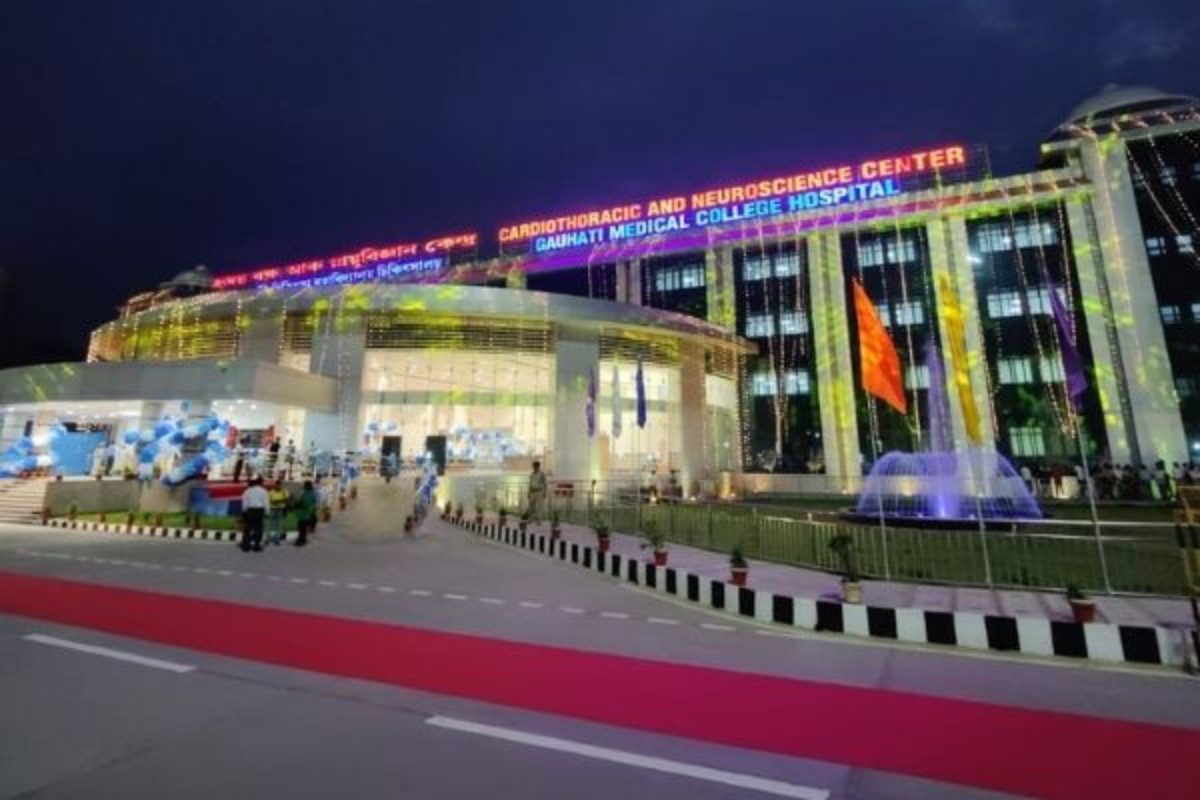
to stay at the new Gauhati Medical College Super Speciality Hospital for around
a fortnight as an attendant. This stay was my first such experience. Before
that, I have been to hospitals to pay visits to different people I knew — with
fruits or bouquets or ‘get well soon’ cards. I too had stayed at a nursing home
when my son was born but that was a happy occasion.
This stay changed my perspective about life. I
realised how blessed I was to stay at a hospital just as an attendant and not
as a patient. At least I was free to take a walk or go home to freshen up or
rest at home for a night when someone else came to relieve me.
This was a nephrology ward at the new campus, as my
dear one was a kidney patient. It was a general female ward with patients from
different backgrounds and age groups. The youngest patient was hardly 10 years
old. The mere thought of her cries in agony still gives me shivers. Whenever
she cried, there was pin drop silence in the whole ward.
The senior doctors would come on rounds once a day
but the junior doctors were on their toes throughout the day, monitoring
patients, taking updates and advising attendants. Once the new campus is fully
operational, the cardiology, neurology, cardiac surgery and neurosurgery
departments will be shifted there from the old Gauhati Medical College and
Hospital (GMCH) building on the other side of the road.
Breathlessness is a common symptom among kidney
patients. Most of the patients had to be on oxygen for the first two-three
nights. The feeling of helplessness — just watching, not able to do anything —
when a person in front of you is not able to breathe, and feeling relieved once
oxygen support is given, can’t be expressed in words.
I have seen patients spending nights just sitting —
putting their head down on a side table as lying down aggravated their
breathing problem. One of the patients was so serious that she had to be
shifted to the ICU.
Another patient was diabetic with high pressure. Her
daughter-in-law was a nurse at some other hospital. The patient shared how they
grow everything in their own farm but she can’t eat anything as her
daughter-in-law is too strict, and serves her just a little rice and moong dal
all the time — maybe out of concern or fear. But sometimes we should think from
the patient’s perspective too and give them something variety to eat, albeit
healthy.
The nephrology ward was maintained very well. Twice a day, the cleaners would sweep and mop the floors,
something hardly seen in government hospitals. But the toilets were pathetic,
and it was not the fault of the cleaners. The toilets were also cleaned twice.
It was the attendants who were at fault this time. Though there was an ample
supply of water, very few would flush properly. There were separate bathrooms
with a warm water facility. But the attendants would use the space to wash
utensils. Most of the time, the wash basins would be blocked with food
leftovers. And sometimes they would use the bath space for other uses also.
I would really salute the junior doctors who would
work diligently from 8.30 am for almost 10-12 hours, taking care of each
patient of the ward. Even the nurses were on their toes — some of them though
would get irritated with small things, but some were sweet. I understand their
job is tiring but they should also not forget their job is to serve with love
and compassion.
Dialysis is a procedure to remove waste and excess
fluid from blood when the kidneys stop working properly. It often involves
diverting blood to a machine to be cleaned. It’s a room of hope: as at least with
the help of a machine, a patient’s symptoms would improve, especially the
appetite to consume something.
Outside the waiting space at the dialysis room,
often there were simple village people who felt lost in that atmosphere. I felt
content helping them with simple things like approaching the doctor, taking a
patient to the dialysis room, forwarding reports on WhatsApp, etc. An elderly in-patient came with her son so I helped her change her clothes. When she was
discharged, she touched my head and blessed me. It brought tears to my eyes, I
felt so happy.
Once I had to go to the GMC old building for my
patient’s hand fistula check-up. A ward boy helped us, going out of the way.
Seeing the unhygienic condition there, I just wished it was also maintained like
the new campus. The old building is like a labyrinth but there are help desks
to help people lost in the maze.
Usually I was busy with my patient during day time
— taking her for tests, dialysis etc. But the rest of the time, I was busy
observing people, especially some stories of hope amid the gloom.
A teenager who cleared her medical entrance was on
dialysis. She was waiting for a kidney transplant from her mother. Her parents
were staying with her at the hospital and it was their home for months. The
girl is so determined to become a doctor that she said she would let her mother
give her a kidney only on the condition that she allows her to sit for the
medical entrance again. But her mother didn’t want that. She thought if her
daughter takes stress, her blood pressure would again shoot up — which is
another cause of kidney damage.
Then there was a folk singer who was admitted for a
long time for her urinary tract infection. Determined to go back to stage, she
asserted that even with this health condition, she could sing. She said she
would just need a chair as standing and singing won’t be possible any more.
Later, when she was being shifted to the urology ward, just two floors above, everybody bid adieu to her as if someone from the
family was leaving. Yes that ward became a mini family for everyone — a home
away from home.
Early in the morning, I used to go out to bring
black tea, roti and sabji for my patient and would observe how people rose so
early to earn their livelihood, selling fresh breakfast. As the day progressed,
I had to go out to buy medicines — at times from the pharmacies outside the
campus. I saw how the medical college had become a source of earning for many
and how an entire ecosystem had sprung up in its surroundings. There were rows
of street kiosks and permanent shops selling different things attendants would
need for their patients — fruits, warm water, water bottles, blankets, floor
mats, buckets, stools, etc.
A newly married girl shared her helplessness as her
mother didn’t know that she was a kidney patient and had heart problems too. So
she was unable to convince her mother for dialysis. The day we were given
discharge, we counselled her mother giving our example. We explained how
dialysis would improve her health and that she would even be discharged soon.
Thanks to the Almighty, my patient is better now
and is at home. On the day of release, I felt such government hospitals are a
blessing for people of all backgrounds, especially when people suffer from
diseases where lifelong treatment is required. I just hope that our
governments, both at centre and states, make more such affordable healthcare
centres, as most private hospitals, if not all, are just turning out to be
money-making machines.
Why the Gauhati Super Speciality Hospital is a ray of hope for many


