Showing posts with label #assam. Show all posts

Sunday, 12 February 2023

Why the Gauhati Super Speciality Hospital is a ray of hope for many-- published in EastMojo

Published in EastMojo 

https://www.eastmojo.com/news/2023/02/13/why-the-gauhati-super-speciality-hospital-is-a-ray-of-hope-for-many/

Stories of optimism and determination amid the gloomy atmosphere from Assam’s biggest healthcare facility

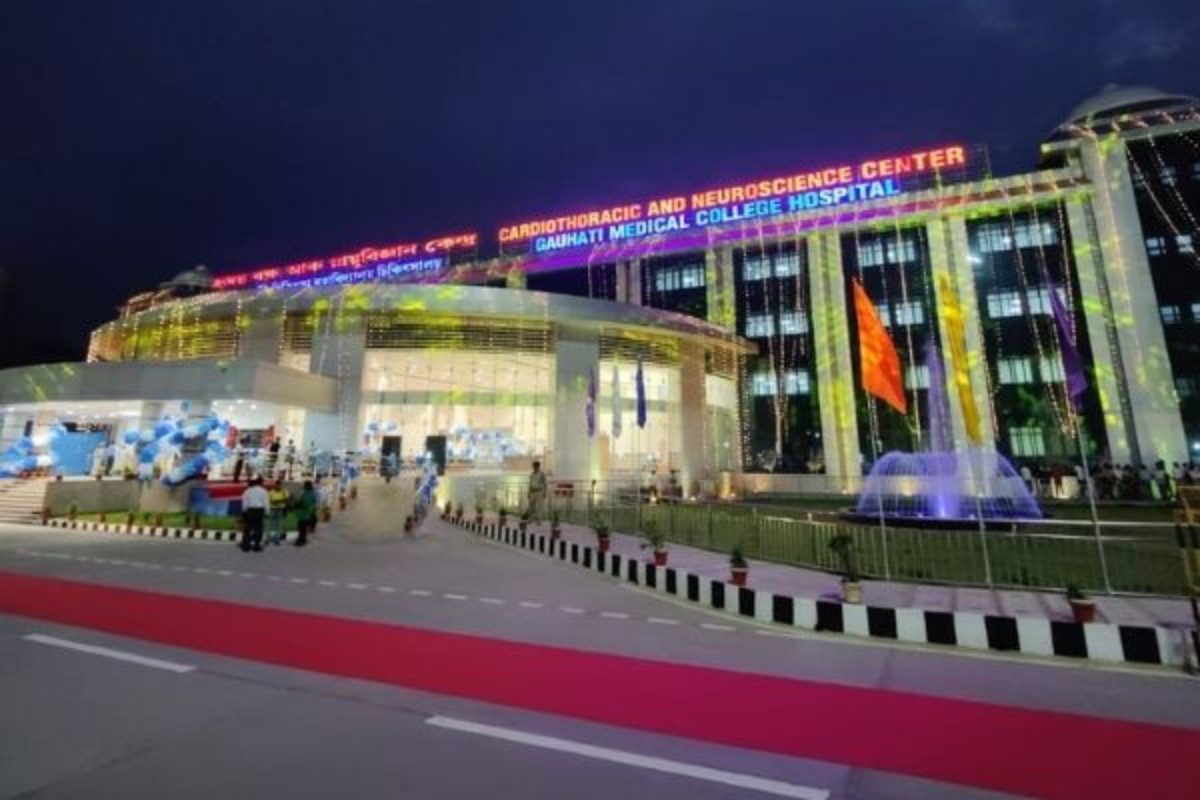
Last month, due to a family health emergency, I had to stay at the new Gauhati Medical College Super Speciality Hospital for around a fortnight as an attendant. This stay was my first such experience. Before that, I have been to hospitals to pay visits to different people I knew — with fruits or bouquets or ‘get well soon’ cards. I too had stayed at a nursing home when my son was born but that was a happy occasion. 

This stay changed my perspective about life. I realised how blessed I was to stay at a hospital just as an attendant and not as a patient. At least I was free to take a walk or go home to freshen up or rest at home for a night when someone else came to relieve me.


This was a nephrology ward at the new campus, as my dear one was a kidney patient. It was a general female ward with patients from different backgrounds and age groups. The youngest patient was hardly 10 years old. The mere thought of her cries in agony still gives me shivers. Whenever she cried, there was pin drop silence in the whole ward.

The senior doctors would come on rounds once a day but the junior doctors were on their toes throughout the day, monitoring patients, taking updates and advising attendants. Once the new campus is fully operational, the cardiology, neurology, cardiac surgery and neurosurgery departments will be shifted there from the old Gauhati Medical College and Hospital (GMCH) building on the other side of the road.

Breathlessness is a common symptom among kidney patients. Most of the patients had to be on oxygen for the first two-three nights. The feeling of helplessness — just watching, not able to do anything — when a person in front of you is not able to breathe, and feeling relieved once oxygen support is given, can’t be expressed in words.

I have seen patients spending nights just sitting — putting their head down on a side table as lying down aggravated their breathing problem. One of the patients was so serious that she had to be shifted to the ICU.

Another patient was diabetic with high pressure. Her daughter-in-law was a nurse at some other hospital. The patient shared how they grow everything in their own farm but she can’t eat anything as her daughter-in-law is too strict, and serves her just a little rice and moong dal all the time — maybe out of concern or fear. But sometimes we should think from the patient’s perspective too and give them something variety to eat, albeit healthy.

The nephrology ward was maintained very well. Twice a day, the cleaners would sweep and mop the floors, something hardly seen in government hospitals. But the toilets were pathetic, and it was not the fault of the cleaners. The toilets were also cleaned twice. It was the attendants who were at fault this time. Though there was an ample supply of water, very few would flush properly. There were separate bathrooms with a warm water facility. But the attendants would use the space to wash utensils. Most of the time, the wash basins would be blocked with food leftovers. And sometimes they would use the bath space for other uses also.

I would really salute the junior doctors who would work diligently from 8.30 am for almost 10-12 hours, taking care of each patient of the ward. Even the nurses were on their toes — some of them though would get irritated with small things, but some were sweet. I understand their job is tiring but they should also not forget their job is to serve with love and compassion.

Dialysis is a procedure to remove waste and excess fluid from blood when the kidneys stop working properly. It often involves diverting blood to a machine to be cleaned. It’s a room of hope: as at least with the help of a machine, a patient’s symptoms would improve, especially the appetite to consume something.

Outside the waiting space at the dialysis room, often there were simple village people who felt lost in that atmosphere. I felt content helping them with simple things like approaching the doctor, taking a patient to the dialysis room, forwarding reports on WhatsApp, etc. An elderly in-patient came with her son so I helped her change her clothes. When she was discharged, she touched my head and blessed me. It brought tears to my eyes, I felt so happy.

Once I had to go to the GMC old building for my patient’s hand fistula check-up. A ward boy helped us, going out of the way. Seeing the unhygienic condition there, I just wished it was also maintained like the new campus. The old building is like a labyrinth but there are help desks to help people lost in the maze.

Usually I was busy with my patient during day time — taking her for tests, dialysis etc. But the rest of the time, I was busy observing people, especially some stories of hope amid the gloom.

A teenager who cleared her medical entrance was on dialysis. She was waiting for a kidney transplant from her mother. Her parents were staying with her at the hospital and it was their home for months. The girl is so determined to become a doctor that she said she would let her mother give her a kidney only on the condition that she allows her to sit for the medical entrance again. But her mother didn’t want that. She thought if her daughter takes stress, her blood pressure would again shoot up — which is another cause of kidney damage.

Then there was a folk singer who was admitted for a long time for her urinary tract infection. Determined to go back to stage, she asserted that even with this health condition, she could sing. She said she would just need a chair as standing and singing won’t be possible any more. Later, when she was being shifted to the urology ward, just two floors above, everybody bid adieu to her as if someone from the family was leaving. Yes that ward became a mini family for everyone — a home away from home.

Early in the morning, I used to go out to bring black tea, roti and sabji for my patient and would observe how people rose so early to earn their livelihood, selling fresh breakfast. As the day progressed, I had to go out to buy medicines — at times from the pharmacies outside the campus. I saw how the medical college had become a source of earning for many and how an entire ecosystem had sprung up in its surroundings. There were rows of street kiosks and permanent shops selling different things attendants would need for their patients — fruits, warm water, water bottles, blankets, floor mats, buckets, stools, etc. 

A newly married girl shared her helplessness as her mother didn’t know that she was a kidney patient and had heart problems too. So she was unable to convince her mother for dialysis. The day we were given discharge, we counselled her mother giving our example. We explained how dialysis would improve her health and that she would even be discharged soon.

Thanks to the Almighty, my patient is better now and is at home. On the day of release, I felt such government hospitals are a blessing for people of all backgrounds, especially when people suffer from diseases where lifelong treatment is required. I just hope that our governments, both at centre and states, make more such affordable healthcare centres, as most private hospitals, if not all, are just turning out to be money-making machines.  

Why the Gauhati Super Speciality Hospital is a ray of hope for many

Friday, 22 July 2022

Top tourist destinations to explore in Assam: published in momspresso


What to explore in Assam

My friends in Delhi often ask me which places in Assam they should visit to have a best feel of the state and its culture. To cater to their wishes, and many such other people who would want to visit the Northeast but stop short because of lack of information, I thought of writing on the major attractions of Assam.

Guwahati, the capital city of Assam, is the gateway to the north-east. In Guwahati itself—which is surrounded by hills on three sides and the might Brahmaputra river flowing by—you have lots to see. Even if you are on an official tour to the city, you can find some time and do a quick explore.

First let’s talk about the capital city. You can reach Guwahati by train from any state capital and other major cities, or you can take a flight.


*The famous Kamakhya temple, a Shaktipeeth dedicated to the mother goddess Kamakhya, is located on the Nilachal hills, which overlook Guwahati and the river Brahmaputra. It’s a breath-taking sight which you will remember for your life.


*Umananda, the smallest inhabited river islet in the middle of Brahmaputra, is a must visit. You can reach there by boat or a state-run ferry. The 15-minute ride through the rocking waters of the mighty Brahmaputra is just incredible. The green and quiet surroundings of the temple are a haven for nature lovers and music to the ears.


*If you are a water lover, then you should visit Deepor Beel, a Ramsar site located to the south-west of Guwahati. It is a permanent freshwater lake, in a former channel of the Brahmaputra, to the south of the main river, a fresh water wetland and home to migratory birds. The state government has plans to develop boat houses to attract more tourists.


Ropeway over Brahmaputra

*The next spot is India’s longest ropeway built over the Brahmaputra. It provides a spectacular view of the river. From Kachari Ghat on the south banks, you can take the ropeway to North Guwahati and spend quality time on the other side of the river. You can visit the Doul Govinda Temple, dedicated to Lord Krishna on the northern banks, on the foothills of Chandra Bharati hill at Rajaduar.

*There are a few river cruises on the river from where you can enjoy the sunset or have dinner, enjoying the ride that will make you forget all your stress and worries.

If you have more time, you can visit the Assam State Museum, Guwahati Zoo, Guwahati Planetarium, ISKCON temple, Nabagraha temple, Srimanta Shankardeva Kalashetra, Guwahati War Memorial, Sukreshwar temple, again on the banks of the Brahmaputra, and the Basistha Ashram on the city outskirts, bordering Meghalaya, where there is a beautiful waterfall and a stream.


*You can visit the Chandubi Lake, a sprawling natural lake located in the Rabha Hasong Autonomous Council, Kamrup district, at a distance of 64 kilometres from Guwahati. Cabs are available from Guwahati to the lake that was formed after an earthquake.

Chandubi Lake

You can enjoy the beautiful tea gardens and the raw jungles on the way and the culture and life of the villagers. There are resorts on the other side of the lake. Visitors can opt for fishing in the lake. The lake administrators also offer provisions to go rowing in the calm waters.

*Haflong: To explore Haflong, you can take Vistadome train from Guwahati to Haflong. You can stay for a few hours and return on the same evening by the same train. If you stay there, you can visit the Haflong Lake, where you can enjoy boating and the picturesque surroundings. You can also visit Maibang and Jatinga, the valley of birds.

*Kaziranga: You can take a bus or book a cab from Guwahati to reach the Kaziranga National Park. Spread across the floodplains of the Brahmaputra, its forests, wetlands and grasslands are home to one-horned rhinoceroses, elephants and tigers. Ganges river dolphins are also found in the park’s waters. It is visited by many rare migratory birds and gray pelicans roost. You can try elephant safari or jeep safari. One night is enough to explore the national park if you are short on time. You can also try the Brahmaputra cruise for a different perspective of the Kaziranga.

*Manas National Park: This UNESCO heritage site is a tiger and elephant reserve, where you can go for a safari and enjoy on the banks of the Manas River. You can also visit Bogamati near the river Barnadi.

*Sualkuchi: Also called 'Manchester of East' it is a small village that displays the culture and traditions of Assam. The weaving village is known for its skills and craftsmanship for producing one of the best kinds of silk, and you can buy the fabric at a much lesser price than cities. Don’t forget to visit the nearby banks of Brahmaputra in the evening to calm your mind. If you love spiritual places, you can visit Hatisatra, a monastery dedicated to Lord Krishna, Sidheswar Devalaya, Ganesh Bigrah temple, Hayagriva Madhava Temple at Hajo.

*Majuli: It is the largest riverine island in the world. Enjoy the unspoilt water bodies and village life in Majuli, visit different satras (monasteries). Do visit Tengapania, located on the banks of the Brahmaputra, a popular picnic spot of the region and a major attraction for tourists. Do visit the Thengal manor—a lovely Assamese bungalow with a vintage charm— in nearby Jorhat. And the tea belt in upper Assam, which offers a lush green landscape.

*Dhola Sadiya bridge: Have a spectacular view of the Brahmaputra river from the Dhola Sadiya Bridge or the Bhupen Hazarika Setu, the longest river bridge in India that serves as a major link between Assam and Arunachal Pradesh. The Dibru Saikhowa national park, home to wild horses, is not far off.

 *Panimur waterfall is located in Umrangso of Dima Hasao district of Assam in the North Cachar hills. It is called the Niagara of Assam as it has a stunning resemblance. The view of the beautiful Kopili river water hitting the rocks finally gushing down is breath-taking.

All the places have connectivity from Guwahati through buses and cabs. It’s better to visit the state from September to March. You can also visit other state capitals of the north-east from Guwahati and enjoy the hospitality and warmth of the people. 

Top tourist destinations to explore in Assam

Also watch video from our youtube channel

Top destinations in Assam 


Wednesday, 2 March 2022

Why Northeast India has high prevalence of cancer cases -- East Mojo

 published in EastMojo on Feb 4, 2022

Here is why Northeast has high prevalence of cancer cases 

Northeast is becoming the cancer capital of India and there is an urgent need to take a deep dive into the grave issue if we want to stem the rise

The increasing number of cancer cases in the Northeast is a matter of concern and detailed studies are needed to find out the reasons behind the high prevalence in the region, say experts, who also stressed on the need to eradicate the use of tobacco, one of the key reasons behind the killer disease.

Last year, the Indian Council of Medical Research (ICMR) and National Centre for Disease Informatics & Research (NCDIR), Bengaluru, had projected that the number of new cancer cases in the Northeast region is likely to increase to 57,131 by 2025, in comparison to the estimated 50,317 in 2020.

These estimates are based on cancer data compiled by eleven Population Based Cancer Registries (PBCRs) in all the eight states.

The report titled “Profile of cancer and related health indicators in the Northeast Region of India” also includes data from seven hospital-based cancer registries (HBCRs) in Assam, Manipur, Mizoram and Tripura from 2012 to 2016.

“Yes, the scenario is very alarming. A number of well-designed epidemiological studies combined with molecular biomarkers are needed to understand high prevalence of cancer in the region,” said Dr Tapan Saikia, a medical oncologist and blood stem cell transplant physician, said.

A native of Assam, Dr Saikia is the Head of Medical Oncology and Research Director, Prince Ali Khan Hospital, Mumbai. He is also a pro bono visiting professor and consultant at State Cancer Institute, Gauhati Medical College and Hospital, Assam.

Northeastern states have a high burden of cancer, the report says. The highest incidence rate in males (269.4 per 100,000 population) was recorded in Aizawl district in Mizoram, among females (219.8 per 100,000) in Papumpare district in Arunachal Pradesh.

Another important aspect the report points out is the disparity in cancer cases between males and females. It says the proportion of tobacco-related cancers was 49.3% in males and 22.8 % in females. Again, in all the NE states, the incidence of cancer was higher in males than in females, except in Manipur and Sikkim. “The sex disparity is a complex issue. Again, very well-designed population-based studies are needed to find out details. Hospital-based registries are skewed,” Dr Saikia says.

The prevalence of obesity among women aged 15-49 years was highest in Sikkim (34.7%) followed by Manipur (34.1%). While in men, it was highest in Sikkim (36.3%) and lowest in Meghalaya (13.9%). Sikkim had the highest prevalence of hypertension in men (41.6%) and women (34.5%), followed by Manipur (men 33.2% and women 23.0%). In all the eight states, men had a higher blood sugar level when compared to women.

But how are obesity and hypertension linked to cancer? Dr Saikia said that non communicable diseases (NCD) are interrelated, especially diabetes and obesity, with cancer. “Additionally, diabetes and hypertension are interrelated.”

According to the report, the commonly occurring cancers among males were cancer of the oesophagus (13.6%) and lung (10.9%). In females, cancer of the breast was the leading cause (14.5%), followed by that of cervix uteri (12.2%).

Dr Saikia says, “Tobacco and alcohol are etiological factors for most of the NCDs, directly or indirectly. However, there are many cancers that develop due to genetic predispositions. In recent years, a number of models have been discussed and published in high-impact value journals such as Nature and Science. In coming years, further understanding of molecular genetics in the development of cancers will clarify these issues.”

Less than 50% of households in Arunachal Pradesh, Assam, Meghalaya, Nagaland and Tripura were using clean fuel for cooking, mentions the report. So is poverty or poor economic condition another factor?

Dr Saikia says, “There are multiple factors for diagnosis of cancer at advanced stages — socio-economic, poor education about health among lay people, lack of required health care system for early diagnosis.”

The report mentions that the proportion of cancer patients seeking treatment outside the north east was highest for Sikkim (95.3%) and Nagaland (58.1%). For years, people have been generally traveling outside the region for treatment, so hasn’t the situation improved? Dr Saikia said that many states in a country don’t have cancer-focused health care programs. “Of late, some states are waking up.”

At the time of diagnosis of breast, cervix, head and neck, stomach and lung cancers, less than one-third were localised, while the remaining were spread either nearby or distantly in the body.

The use of tobacco, both smokeless and chewing, is widely linked to cancer. In Assam, for example, offering tamul-paan (betel nut and leaf) with raw tobacco to guests is a common practice. People consume paan and are addicted to zarda across all ages so much so that in the Northeast, tobacco is kind of engrained in the culture.

Oncosurgeon Dr Shekhar Salkar says, “All over India, the percentage of smoking cigarettes or bidis is less than 20%. The maximum use is of smokeless tobacco such as gutka, paan masala, zarda, khaini, paan, etc. There is a liquid tobacco found in states like Mizoram, where the cancer rates are high. In the Northeast, the use of tobacco rate is around 45-55 %. Even in weddings if you don’t serve tobacco, they consider it a taboo.”

Dr Salkar, who is Chief of Department of Oncology at Manipal Hospital, Panaji, Goa, and president for the National Organisation for Tobacco Eradication, said it will take a long time for such habits to go as it is ingrained in the culture.

The Global Adult Tobacco Survey (GATS) India, 2016-17, had highlighted the high use of tobacco in the Northeast. The highest prevalence of tobacco use has been reported in Tripura (64.5%).

All the seven states from the Northeast with high tobacco prevalence together account for less than 7% of tobacco users in the country.

Tripura is followed by Mizoram at 58.7 %, Manipur 55.1 %, Assam 48.2 %, Meghalaya 47.0 %, Arunachal Pradesh 45.5 % and Nagaland 43.3 %. The all-India prevalence is 29%.

So how do we check this? “We will have to continue our awareness programme. The people themselves must know that these are the side effects of tobacco. If we continue, we will have problems and suffer and we have to stop all these habits,” Dr Salkar said.

The word cancer itself is scary for the common man. Do those with a family history of cancer have more chances of getting cancer? Dr Saikia concluded, “Cancer is a complex and multifactorial group of disease. A simplified example — if a person has some genetic predilection for development of a particular cancer: if s/he is a heavy tobacco user, the cancer will develop early. Otherwise, it might’ve manifested a few years later or never experienced clinical cancer.”

The writer is an independent journalist and video content creator based in Delhi-NCR and runs a YouTube channel Think Positive Live Healthy.

 Why Northeast India has high prevalence of cancer cases


Sunday, 13 September 2015

#Assam floods: Who cares? Published in #The Hoot


Assam floods: Who cares?


The Hoot link
http://www.thehoot.org/media-watch/media-practice/assam-floods-who-cares-8910


BBC link

http://www.bbc.com/news/world-asia-india-34242066

BBC report on Assam floods mentioned my article
Writing in the media site The Hoot, analyst Kakoli Thakur says while the murder mystery in Mumbai "involving a woman from Assam was hogging the limelight but the state itself, where thousands of people were hit by the worst spate of floods in decades, was reduced to fillers in the newspapers and small news capsules on TV channels".
Ms Thakur argued that if a similar situation happened in any other state, the government and the media would have lost no time in declaring it a national calamity.
Assam is possibly India's most flood-prone state: since 1950, the state has seen at least 12 major floods.
---------------------------------

A few days back, a cartoon was doing the rounds in the social media. It showed a marooned couple sitting on the roof of their dilapidated house amid floods with the husband screaming, “Even I had an affair with Indrani”. And in a hushed tone, the husband was trying to explain to his wife that he was trying to get the attention of the media – obsessed with the Sheena Bora murder case -- to their plight. 
The cartoon reflected a sad irony – a woman from Assam was hogging the limelight but the state itself, where thousands of people were hit by the worst spate of floods in decades, was reduced to fillers in the newspapers and small news capsules on TV channels. Barring one or two, national newspapers and TV channels mostly chose to ignore the fury nature had unleashed on the state, rendering thousands homeless and many dead.
It’s been months since floods are wreaking havoc in Assam. And this is not the first time, year after year Assam faces the same crisis – sometimes mild in nature and most of the times very grave.
To give an idea, this year itself over 60 people have died till now and the number is still counting. According to the daily flood report issued by the Assam State Disaster Management Authority on Sept 7, 14.42 lakh people in 19 districts of the state were then reeling under the floods. If a similar situation happened in any other state, the government and the media took no time in declaring it a national calamity.
Compare it with the coverage Mumbai or Delhi’s waterlogging gets in prime time news. Even a puddle of water in Mumbai is enough to make to the front pages or prime time. Every time Kashmir goes under water or Uttarakhand is ravaged by rain, a battery of reporters is lined up for special coverage from ground zero, prompting people from Assam to ask a pertinent question: “Are we lesser mortals?” It is not that people from the state are craving for media attention or wanting to hog the headlines. But it is also true that there should be a fair balance in reportage and that adequate media coverage also forces the government to sit up and take note.
Nearly 1.5 million people were affected in this year’s floods but our media was busy focusing on the Sheena Bora case as if Assam had nothing to offer for news except that it is the native state of the accused Indrani Mukerjea. Camerapersons and reporters lined up at the Guwahati residence of Indrani when the floods were ravaging the state but hardly any for the flood-hit people. Even the social media – which didn’t spare a moment sharing comments and opinions on the Sheena case -- was not moved enough to spread a message about the seriousness of the situation even after seeing distressing pictures, few of which became public.
People are rendered homeless, they live in relief camps for months in unhygienic conditions, sometimes they go without food for days and the farmers are the worst affected. This year, Dibrugarh in upper Assam -- considered the tea capital of Assam and a medical hub -- went under water for days but no one took notice. Forget about the hundreds of villages where people spend months on dykes and boats and even trees. Last year, 80% of Guwahati, the gateway of the northeast that houses Assam’s capital Dispur, was submerged for days but did anybody even notice?
Sample this. Between August 25, when Indrani Mukerji was arrested, and the first week of September, when the Assam floods reached a critical phase and the Sheena case coverage peaked, the print media largely chose to ignore the grim situation in the state. The floods never made to the front pages and remained restricted to standalone photos or small isolated reports buried inside. This was true for Hindustan Times, Times of India, Indian Express and Hindu.
The electronic and digital media were slightly better off, though the flood coverage hardly made it to the landing page of the websites. Barring India Today TV and Zee TV, which ran special reports from ground zero, other channels restricted the coverage to small news capsules that were overshadowed by the enormity of the Sheena Bora murder case and other news stories. It is quite paradoxical that the media, which calls panel discussions even for the most trivial of subjects, had hardly bothered to call in experts to suggest a solution to the problem that has ravaged the state for decades and crippled its economy.
According to data released by the Assam State Disaster Management Authority on Sept 7 – when the flood was at its peak -- some 1,635 villages had been affected. About 105,716 hectares of crop area had been hit. In all, 308 relief camps and centres had been set up, with over 120,000 people taking refuge. Dibrugarh and Dhemaji districts were among the worst affected. All rivers including the Brahmaputra, Jia Bharali, Dhansiri, Puthimari, Beki, Katakhal and the Kushiyara were flowing above the danger mark. Though the situation has considerably improved, the misery of the people will continue as water-borne diseases rear their ugly head after flood waters recede.
Making the situation worse is the blame game between the state and central governments over flood relief. While the Centre says adequate money has been sent, the state claims even last year’s funds have not been fully disbursed.

As always, sandwiched in the middle are the people of Assam who have to bear the brunt of the floods year after year after year. And the media and the governments merrily choosing to ignore their plight year after year after year.  

Sunday, 26 April 2015

Tuesday, 28 October 2014

Durga Puja, down memory lane


Durga Puja, down memory lane


The word Durga Puja gets every Bengali into a festive mood and equally excited, no matter in which part of the world he or she stays in. As Durga Puja is approaching on October 1, I get nostalgic thinking about those four days during our growing up years. The first thing that came to our mind was shopping, and counting dresses (whether we had at least two dresses for each of the four days). Then came the unending wait: counting how many days and then, how many hours were left for Durga Ma to arrive.

For mornings, there were strict instructions from our mothers to collect flowers and offer them at the puja mandap. It was only during that time of the year when we were early risers. To get more and more flowers, we did not hesitate even to climb the hills to get the best of the lot (in our native place, foothills of Guwahati, Assam). Toy guns were a special possession. So were those moments when we fought with our siblings over bullet rolls to insert in our guns, especially to shoo away boys who would run after us with their guns to dig holes in our new dresses.

We got special permission to roam around with friends during daytime and satiate out taste buds with all the ice-creams, chat and what not with a little raise in our pocket money as special puja allowance. Lunch time was standing in long queues in the sun to get the most tasty food in puja pandals. Evening time was hopping from one pandal to another, admiring different idols and pandal decorations with our parents. If not, then we sit in our neighbourhood pandal and chat with friends on every topic and have a snack break after every half an hour. We went home just to change dresses and to sleep at night, dead tired after roaming the whole day.

As we stepped into our teenage years, Puja time was proposal time from boys. Though we got excited at each proposal but we would love to say ‘NO’ to all and giggle at everything.

But things are no more the same. Now the first thought that comes to our mind is whether we would get leave. With mall culture entering our lives in a big way and shopping becoming a normal phenomenon, buying clothes no more has the same charm. Now children love to play more with computers and mobiles. And there is no safety, so we are scared to send our children to roam carefree like we did in our childhood.

Still, a few things are still the same: The wait for puja, buying at least something new to wear, having yummy prasad in pandals and tasty snacks from all food stalls visible. The special beat of the dhak and the chant Durga Mai ki Jai take us down memory lane! On Dashami day, we still feel the vacuum inside after the immersion of the idol. Only a Bengali can understand the importance of Durga Puja in their lives with the belief ‘Achche bochor abar hobe!’ (Ma will come again next year).
Follow my blog: Mixed Bag


Sunday, 24 August 2014

published in assam tribune, Good bye Orkut, thank you Facebook!

http://www.assamtribune.com/scripts/showpage.asp?id=Sunday_Reading,2,348,216,1068,717


Linked to the world
As news of Orkut signing out of cyber space started doing the rounds, a sense of déjà vu sank in. For us, Orkut would always be special. For, it was our first brush with social networking cutting across distance, cities and even countries. This was where we first discovered our long lost friends, kept in touch with colleagues and relative and shared our precious moments captured in camera with our nearest and dearest ones. That was time when people used to look in aghast at those who were not part of Orkut. That was till Facebook arrived on the scene and became a part and parcel of our lives.


When Orkut finally logs out in September, I will definitely remember it but won’t miss it much thanks to Facebook. Orkut was

 
good as start-up, but Facebook with its vast options is way ahead. It is like switching from a basic cell phone to a touchscreen smartphone –like we remember our first Nokia 3315 that would not break even if thrown on the floor but don’t miss it as now we have our iphones, Samsung Galaxy phones or the Nokia Lumias.

Facebook is now like our cup of morning tea – if we don’t check it once we get up we don’t get that kick that refreshes us for the rest of the day – and also like the daily newspaper – if we don’t read it we miss out on the daily updates of friends and all that they have shared.

Now with smartphones in every hand, not being online on FB 24x7 is almost like being an outcast.

Like on Facebook is full of action; it makes the most introvert person in real life and outspoken and witty in the cyber world. It’s a 24/7 competition for many who keep on posting status almost every hour to outdo each other.

While some self-proclaimed models feel FB is a platform to showcase their pictures, others post pictures of their babies daily as if it’s a baby book.  And still many others click pictures just to post them no matter how small is the occasion is or whether it’s any occasion at all. If it’s an outstation trip, then a new album or multiple albums follow suit.

Some give a daily dose of their lives, about their mood, what’s in menu, husband’s new ways of romancing, kids’ daily progress, books to read, movies to watch, just random videos and thoughts and what not.

One of my office colleagues, who thinks he is a scholar, always is after those who are into Facebooking, “What will happen to today’s youth who is wasting time on Facebook.” I am sure he is not alone, but I want to tell them that it may be sheer madness but Facebook has its own charm.

On the flip side, then there are human bugs who have the irritating habit of tagging – and bugging -- all in whatever they post. A Facebook friend’s friend used to tag me in everything – right from her good morning wish and different thoughts throughout the day and end with a good night. I had to put my friend in the acquaintance list because of that taggy friend of hers.

Then there are those who take pride in declaring their smallest of achievement with élan, giving others the chance to mock at them. Once I had a message war with one of my ex-colleagues who was upset because I forgot to click the ‘like’ button when she posted about her local beauty pageant success.

Many make their relationship public and some even declare break-ups on Facebook. Once when it happened with one of my relatives, the boy had to say sorry to the girl when people started sending him hate messages because of breaking a relationship with a girl on a social network.

But then Facebook is not about sharing random things. Time and again, it has played a very important role in spreading important information and uniting masses – be it the Anna movement or the December 16 rape aftermath in Delhi.

Sometimes I wonder how life will be without Facebook. As I deleted Orkut account today, I thank my stars that I have Facebook to keep me connected to the world.


Tuesday, 17 July 2012

Interview with Zubeen Garg in Mumbai, published in North East Sun, Delhi


Interview with Zubeen Garg in Mumbai, published in  North East Sun, Delhi


My people are my biggest inspiration: Zubeen Garg


Ya Ali may have catapulted him to the big league of Hindi film music world, but that doesn't mean Zubeen Garg is taking it easy. For, rising in the popularity charts means he shoulders a much bigger responsibility now – to maintain the position. Even he knows nothing is permanent in Bollywood.
How has life changed after Ya Ali? "It's more hectic. I'm tired of travelling abroad and in India. It's tough to balance," says Zubeen.
Right now, Zubeen is working on several projects, including preparing music for two Hindi films, readying his new Hindi album, singing in Hindi and South Indian films. He has something for Assam as well. It's an album titled Mur Prio Geet, a remake of old popular Assamese songs.
His Hindi album Zindagi evoked wide-spread response and crossed platinum, means it sold more than 4 lakh of copies.
Besides music, Zubeen is an actor-director too and he's working in this direction too – a truly multi-faceted personality. "For direction, I' m writing my Hindi script Chakra. I want to start shooting in December."
Now that he is a known face in Mumbai, how does it feel? "It feels great to represent Assam nationally and internationally."
This dream boy also has a dream, "to do a song with Sting, Kenny G, Joe Satriany and Eric Clapton someday."
Reality shows are something that don't attract Zubeen too much though he did have to go at one such show in Sahara TV and quit after initial episodes. He also judged a singing show in Zee Bangla. But why did he really quit the Sahara show? "I didn't like the show. I never wanted to get in a contest. I liked Zee Bangla because I was a judge there. People shouldn't try to use artists."
Zubeen's musical journey started right from his childhood. He was in nursery when he started humming under the tutelage of his mother, his first guru. After his matric, Zubeen started playing keyboards and composing songs. "I wasn't sure about singing but I wanted to be a music director." In 1993, he released his first album Anamika, which went on to become a huge hit. And there was no looking back.
In 1995, Zubeen decided to try his luck in Mumbai. Initially, he faced some problems as he was alone. "Gradually I made contacts and people started calling me for work," says Zubeen.
Ask Zubeen the difference between Mumbai and Assam and he says, "Assam is my place and I have good hold there. In Assam, I can experiment according to my wishes. But in Mumbai, I have to be careful what I do."
He says language barrier is one reason why many talented Assamese singers find it difficult to set foot Mumbai. "We are from a simple background. Language is also a barrier for some. We also don't have an Assamese promoting company here. But slowly it's gaining momentum."

Zubeen thinks his biggest achievement to date is his popularity in Assam. "The way people love me is really wonderful. It keeps me going strong," he says.
And what about acting? "Cinema was my all time love. I took time to get into it because I wanted to know it totally. I love acting and it's in my blood." He has acted in Assamese film Mon Jai. His film Dinobandhu has won a national award. "I'm going to make some real good movie," he says.
Inspiration? And pat comes a reply. "My people are my biggest inspiration. My close friends and my family inspire me a lot."

Follow my blog: