Coding is all over social media and TV these days. The
government plans to introduce coding from class 6. But is the hype really
justified? What should be the ripe age to teach coding to kids? Is exposing
kids as small as five or six to coding good?
I came across the word ‘coding’ on social media when
celebrity influencers were seen talking about it, often arguing that it is the most
‘in’ thing and that is why they are enrolling their children for the course. It
was all over on most social media platforms, so it was bound to catch my
attention again and again.
When the Government of India introduced the National
Education Policy 2020, one of the prominent reforms was the initiation of
classes on ‘coding’ for students from class 6. The argument is introducing
coding and increasing exposure to technology at a young age will help the youth
lead the way to a world of innovation and creativity, and give them an
opportunity to set their goals and reach new heights. So it made me think more
about coding.
But while talking to a professor in NEHU
(North-Eastern Hill University), it made me ponder. He was talking about ads,
promoting teaching coding to very young kids. He says, “This really baffles me
to see how this new phenomenon is being pushed into our lives. Kids are meant
to play, let them be kids and not a programmer. It is worrying that parents are
going with the flow, and people are calling me to teach coding to their
kids.”
I told him that if the new education policy is
implemented, then they might introduce coding from class 6 in schools. To that
he smiled and said, “Class 6 is still acceptable, but primary level?”
The death of Sushant Singh Rajput was all over the
news and one of the things that was said about him was that he was intelligent,
a thinker and a visionary. After the announcement of several reforms under the
New Education Policy, a clip of Sushant Singh Rajput's video went viral, where
he was stressing on the need to have coding in school curriculum. "65% of
the students who are going to kindergarten this year will do jobs in technology
that we haven't invented yet," Sushant said in an old interview, adding
that in a situation like this, even schools are clueless as to what to teach. He
said coding will have to be included in the curriculum as this is going to be
the language we will need in the next few years. So I got another point to
convince myself that yes, may be coding is the future.
Immediately after, I came across one such ad on social
media promoting free one-hour coding session on weekends for children up to 14
years. The ad had the picture of Sundar Pichai, the Chief Executive Officer of
Alphabet Inc. and its subsidiary Google LLC. To be frank, the picture of Pichai
convinced me more to give a thought about it as I have a 12-year-old at home. In
the comment section, a lot of parents even enquired whether Pichai would take
the session. But I was sure he won’t. But still, we registered for our son and
finally the day came.
After a few initial glitches, the class started. And
we were in the next room, we could hear our son’s voice on and off. After about
45 minutes, we just thought we should peep what our son was doing. And we could
see him engrossed in the session. After the session was over, the teacher
called us to give feedback about our son. We could make from our son’s face
that he liked the session. The teacher told us that they don’t try to convince
all parents to enrol their kids for the course but only do that when they see real
interest in the children. And that our son had completed the session
successfully. They also sent us the programing he made with the help of the
online teacher. The education counsellor tried hard to convince us, but for now,
we said no to enrolling for the classes as his exam was going on — even though
we are bombarded with emails almost every day.
Meanwhile, one of the ads being telecast on television
and is all over social media.
https://www.youtube.com/watch?v=PjmGvPD5A7s
Whenever our son sees this ad, he keeps on reminding
us that he really liked the coding session.
We told him that let’s see if coding is introduced in
school in the next academic session. If yes, then definitely he could choose
that option. If no, then we would enrol him in some coding course for a month
in the next summer vacations.
My son will be in class 8 next year and I will be
happy if coding is introduced in schools. I am okay with it because he
understood it and he is really interested to explore more of it.
My son is old enough to understand if he should go for
coding or if he has that aptitude so that he can pursue it further in life.
Now the question remains how right is it to force children
as young as six or seven years to introduce coding in their lives — in fact most
coding ads show very young children who seem to be very happy making their own
apps, marking it as some kind of achievement.
In fact, there have been studies galore on how
over-exposure to technology can have a negative bearing on children and lead to
health and psychological problems. Social media users have also not taken
kindly to the carpet-bombing of coding ads, perceiving them as an intention toforce-feed parents into accepting coding — creating some kind of FOMO (fear
of missing out).
Should parents go with the flow just because it’s all
over social media? Or should we not let kids be happy in their own beautiful world
and enjoy their childhood and let them take a call when time is ripe for them? Maybe
it is time for a debate.
Look around, right from the mobile phone to the hair
dryer, you will find almost everything has a Chinese connection. So just saying
boycott Made-in-China products is easier said than done
Kakoli Thakur | Delhi | June 22, 2020
Ever since the India-China violent stand-off in
Ladakh, social media in India is going hammer and tongs with anti-China
sentiment — calling for banning Made-in-China products and going local by
embracing Made-in-India stuff. But, thinking practically, given the way Chinese
have made inroads in India, is it really possible, I wondered? I thought of
starting off with my own house and looked around if I could junk some Chinese
products.
To start with, I thought of the most important thing in
our lives today — the mobile phone. And found myself facing the Shakespearean
dialogue, ‘Et Tu Brutus?’ For, I possessed a Redmi (read Chinese phone), using
it for the last six months. To be honest, I would think twice before dumping it
as I had to dig deep into my pocket to get one. In fact, India’s mobile phone
market is dominated by China. Xiaomi, Lenovo, Oppo, Vivo, OnePlus to name a few
— these are all Chinese mobile companies, assembling and manufacturing
smartphones in India as a part of the Make-in-India initiative.
I work from home and my son has to attend online
classes. Luckily we have two computers at home. I have an HP all-in-one, an American
company. So far, so good! I dug a little deeper into their website to find that
Hewlett-Packard sourcesa lot of its components from China. But I can’t dump
my comp for that one reason.
Then our
old computer, which our son uses, had become very slow and so we took it to a
computer shop to see if it can be salvaged. The technician convinced us that he
would reassemble it with the price less than a new computer by changing just a
few parts. No prizes for guessing where the parts came from—all Made in China
of course!
I looked down and noticed that the two UPS inverters attached
to the two computers were made in China. Now if we have to go with the flow and
ban China-made products, we need to dump them and buy that of Indian brands. Not
a cost-effective proposition at all!
Visit any toy shop
and the shopkeeper would always try to convince you to buy China-made toys as you
will get exact replicas of branded toys and at a much lesser price (he would
never mention the huge margin he gets, of course). When all the hue and cry
began about boycotting China-made products, out of curiosity, we checked a few
old toys, including a Holi phichkari, of our son, and to our surprise, we found
that most of them had a tag written in tiny alphabets — Made in China.
In the lockdown, we started ordering grocery online. The
payment would be through Paytm, as it was convenient. An Indian e-commerce
payment company at last! But no, Paytm also has Chinese investors investing big
in the company. In the meantime, my help called and asked me to send her salary
through Paytm as she is in a containment zone now, and so am I, due to Covid
positive cases in the areas. Now if I tell her, no I can’t do that as the
company has a China connection and it will be ‘unpatriotic’ to do so, will she even
understand it? But I am sure she must have heard that ‘China ko ban karna
chahiye’, as everywhere people are talking about it in every strata of society.
Surfing news websites, I found quite a lot of
information about where Chinese firms had invested big in India.
In 2018, Alibaba invested huge in online grocer
BigBasket (from where we order stuff). It had also invested in food delivery
app Zomato (so, no online ordering of food). Tencent has a huge investment on
ride-hailing app Ola, and e-commerce platform Flipkart too. Alibaba is a large
investor also in Paytm, while Tencent has invested in BYJU’s, the education
start-up.
Seeing the medicine box I remembered coming across an
article that had this para: “Your medicine, prescription or otherwise, may not
come from China (although many do), but there’s a high likelihood it contains
ingredients that originated in China and other countries affected by the
coronavirus.” And it is true — China is a major producer of drug ingredients,
known as ‘active pharmaceutical ingredients (APIs)’. In fact, two-thirds of the
total imports of bulk drugs come from China, Union Minister for Chemicals and
Fertilizers DV Sadananda Gowda had told the Lok Sabha earlier this year. So
does that mean, we will stop taking medicines? Absolutely not!
You all must have LED bulbs at home, emitting that
brilliant white light. Well, even these have a China link with manufacturing
hubs located in China or the use of China technology.
Love your silk sarees? Well, then don’t forget that
silk fabric was invented in ancient China and played an important role in their
culture and economy for thousands of years. We got it much later when the
famous Silk Road opened.
How to forget the popular app TikTok, which is an
American video-sharing social networking service but owned by ByteDance, a
Beijing-based internet technology company? But how many people will uninstall
TikTok, which is a craze among youngsters, from their phones? The irony is that
a lot of anti-China memes and videos are being made on TikTok and shared. Even
otherwise, people are enjoying funny videos made on the platform and sharing it
freely — forgetting at that moment the ‘ban China’ sentiment.
If asked what is your favourite food many of us would
promptly reply Chinese — until now, maybe. Now we have to think of a second
best option. Being a Bengali, I would prefer Bengali cuisine. For many, may be,
Punjabi would be the best reply. But is it really possible to say no to noodles
if it is made in India as the concept after all is Chinese? Though the Indian
version of Chinese food is different from that of original Chinese cuisine,
after all it has a China connection.
Felt like laughing when I read on a website that a political
figure said that the best option is to shut down Chinese restaurants. But is it
really possible? Or will it really help to counter the Chinese by banning some
eateries, which, obviously, would be owned by Indians.
Even that morning cuppa you have to begin your day afresh
has a Chinese connection as tea is said to have originated in north Burma and
southwestern China as a medicated drink.
Such is the craze of people to ban China that some
political party worker in Bengal’s Asansol burnt the effigy of North Korea’s
Kim Jong-un confusing him with China’s Xi Jinping.
There is no dearth of memes on social media. A video
was doing the rounds where a group bought a Chinese TV just to throw it and
break it into pieces. Who will tell those people that you have wasted your
money, not China’s.
I read that while India exports mostly a basket of
primary goods to China, including cotton, yarn, organic chemicals, ores, natural
pearls, precious stones and fabrics. Chinese imports into India include
electric machinery, electronic equipment, nuclear reactors, boilers, solar
energy components, etc. The list of China’s footprint is long.
In our childhood, having a Wing Sung pen was a prized
possession, which again was manufactured in China from The Shanghai Hero Pen
Company. China is everywhere and we have been using Made-in-China products for
the longest time. And banning Made-in-China products, at least in the present
times when there are no sufficient valid Indian alternatives, is easier said
than done.
When I as an ordinary citizen am finding it difficult
to ban China from my small home, I wonder how India as a country with billions
of dollars at stake, will ban China.
Commentary: Do
consumers really care about brands when bare essential is top priority?
As consumers scramble
to get their supply of daily essentials, it remains to be seen if they look for
their preferred brands or just manage with whatever they can lay their hands on
Kakoli Thakur | April
13, 2020
In this hour of a
global health crisis, when the Covid-19 threat has spread to every corner of
the world, it is interesting to observe how relevant brands are to a consumer whose
primary concern is now getting hold of his supply of daily essentials.
As mandated by the
government, though grocery shops and pharmacies are open during the 21-day lockdown—which
many states have extended till April 30—essential items are vanishing off the
shelves either due to the non-availability or panic buying. The result: scarcity
of items of daily use, forget your favourite brand.
Sample this. Suppose
a consumer prefers Dettol hand wash over any other brand. But what happens when
he goes to a nearby shop to get one and the shopkeeper informs him that only Savlon
and some other brand is available. What will the consumer do? He will obviously
buy whatever is available instead of thinking about his preference, knowing the
importance of hand wash to keep the coronavirus at bay.
Again, there has been
a lot of debate regarding the use of hand sanitiser in the absence of soap and
water. Awareness ads and videos in different mediums say only sanitiser with at
least 60% alcohol content should be used. Knowing the urgency, people are even
hoarding sanitisers at home as they are not sure how long the lockdown will
last. As such, branded ones are flying off shelves and people are buying
whatever they are getting their hands on — even local products offered by
fly-by-night operators. Though it’s specified on the bottles that there is 60%
alcohol, what is the guarantee about it?
Some people argue
that washing hands with soap and water is enough and also doubt the efficacy of
hand sanitisers. Lifebuoy even went to the extent of creating an ad, showing a
doctor saying, “Not only Lifebuoy, whatever hand wash or soap or hand sanitiser
is handy, wash and clean your hand to save yourself from coronavirus”.
Veterans and
old-timers are saying the world has never faced such a crisis ever since World
War-II. In fact, during World War II, only countries in war zones were affected
but Covid-19 has spared no one and forced a global shutdown. So in this hour,
food is the most essential thing anyone would need — branded or non-branded.
If a consumer visits
a shop to buy Aashirvaad Atta, for example, and the shopkeeper says only some
other brand or a local variant is available, that person will not return empty
handed. Because the foremost thought in his mind would be choosing between
staying hungry and getting something, at least.
For students staying
away from home and bachelors who don’t know how to cook, the anytime favourite is
Maggi instant noodles. So at the onset of this crisis, such people, and even
families, hoarded Maggi packets — even in cartons. Three weeks into the
lockdown, when home stocks have started drying out, people are buying whatever
they are getting —it could be either Yippee or some other Maggi lookalike as it’s
easy to make for whom cooking is an alien concept. The thought behind this is,
obviously, getting an instant snack.
As positive cases
increase every hour and people are scared to even step out of home, they are
not even thinking of buying anything beyond essential — leave aside anything
luxurious. Food takeaways are available but are people really getting what they
want?
When a KFC fan called
an outlet in a posh Delhi locality in the evening, he was told they were done
for the day and nothing was left. So that person had to skip his evening snack
that day. This is just an instance.
A lot of brands are
delivering essentials at the doorstep — with a waiting time extending up to
even days in some cases such as Bigbasket as one NCR resident pointed out — but
even they can supply till stocks are available. But what about places where
such deliveries are not available? In remote pockets? In unauthorised colonies
in big cities? Or even in posh high-rises where delivery boys are not allowed
in?
So manufacturing and
distribution of essentials is more crucial at this hour at a time when staying
safe, and alive, has become the top priority and people are not even thinking
about brand preferences.
A nostalgic look at the days when TV was synonymous with the national
broadcaster and when good content ruled the air waves
Kakoli Thakur | Delhi | September 18, 2019
Last Sunday, good old Doordarshan turned 60. When I came across this
news, I became nostalgic and went down memory lane. I recalled how important DD
was to us back then in the ’80s when there was no DTH or cable or OTT players
or Internet. Filled with nostalgia, I could not stop myself from writing this
small piece as a tribute and celebrate 60 years of our national channel.
Doordarshan, which began as an experiment on September 15, 1959, and
became a service in 1965, turned 60 on September 15, 2019.
Those were the days of no cable and DD was the only channel as a mode of
entertainment.
I remember, during the early DD days, we didn’t even have a television
and only one or two houses in our neighbourhood had the luxury of buying a TV
set. We as children were allowed to visit our neighbours only on weekends to
watch our favourite programmes. Before that, television was only part of our
social study books.
Gradually, more and more houses started making television a part of
their drawing rooms, a thing to show off in those days. But I am only talking
about black and white television. Having a colour TV set was a super luxury and
only a few could afford it. Samosa and mithai treat was given to
neighbours to announce the good news of a TV set — as if a newborn had arrived
in the house. That was a time when television united families in their drawing
rooms.
In the initial days, at 5 pm, a striped screen appeared as one would
switch on the set and patiently wait for the channel to go live. It was not a
24-hour channel then and broadcast was limited to the evening hours. Slowly, the
famous DD tune would play along as the logo rotated from a hazy background and
appeared on screen as people cheered and clapped. We often used to hum along the
soothing music.
Over time, the broadcast timings got extended to morning and afternoon
hours and years later, Doordarshan got a sibling in DD Metro.
Ramanand Sagar’s Ramayan was a craze those days. On Sunday
mornings, when the show aired, the roads had a deserted look. People followed
it religiously and the elderly people even showed agarbatti and diya
to the television when the title song played every Sunday. People wanted to
touch the feet of Arun Govil and Deepika Chikhalia, who played Ram and Sita,
whenever they were seen in public.
BR Chopra’s Mahabharat was another popular show those days. We all
came to know about the story and characters of the epic better through the
show.
The daily evening Samachar was a must watch for all as it was
time to get information about city, state, country and the world. The news and
anchors both were simple and sober unlike today when noise rules. Those were
the days when anchors Salma Sultan, Geetanjali Aiyer, Komal.G.B.Singh, Neethi
Ravindran, Rini Simon Khanna, Sarla Maheshwari, Minu and Shammi Narang were
household names.
Chitrahaar was another popular programme on DD National,
featuring song clips from Bollywood films. It was aired twice a week and I
remember we studied extra hours so that we were allowed to have a glimpse of the
Bollywood world.
We eagerly waited for Sunday evenings as a movie was aired every week. No one cared if it
was an old movie or a recent one; we watched them all. Sometimes electricity
played the spoilsport but we as children took that opportunity to play outside
and the moment power came back, we shouted in chorus, and sometimes got scolded
for that, but those were fun days.
Other popular shows were Yeh Jo Hai Zindagi, Rajni, Karamchand, Dekh
Bhai Dekh, Malgudi Days, Surabhi and the list is endless. Who can forget
the first daily soap operas Hum Log and Buniyaad? And Bharat
Ek Khoj, the 53-episode Indian historical drama based on the book The
Discovery of India (1946) by Jawaharlal Nehru? And, of course, the evergreen
Duck Tales, Tom and Jerry and Mowgli!
Programmes such as Krishi Darshan were boring for us as kids but
for adults, it was information and we could not even giggle about it.
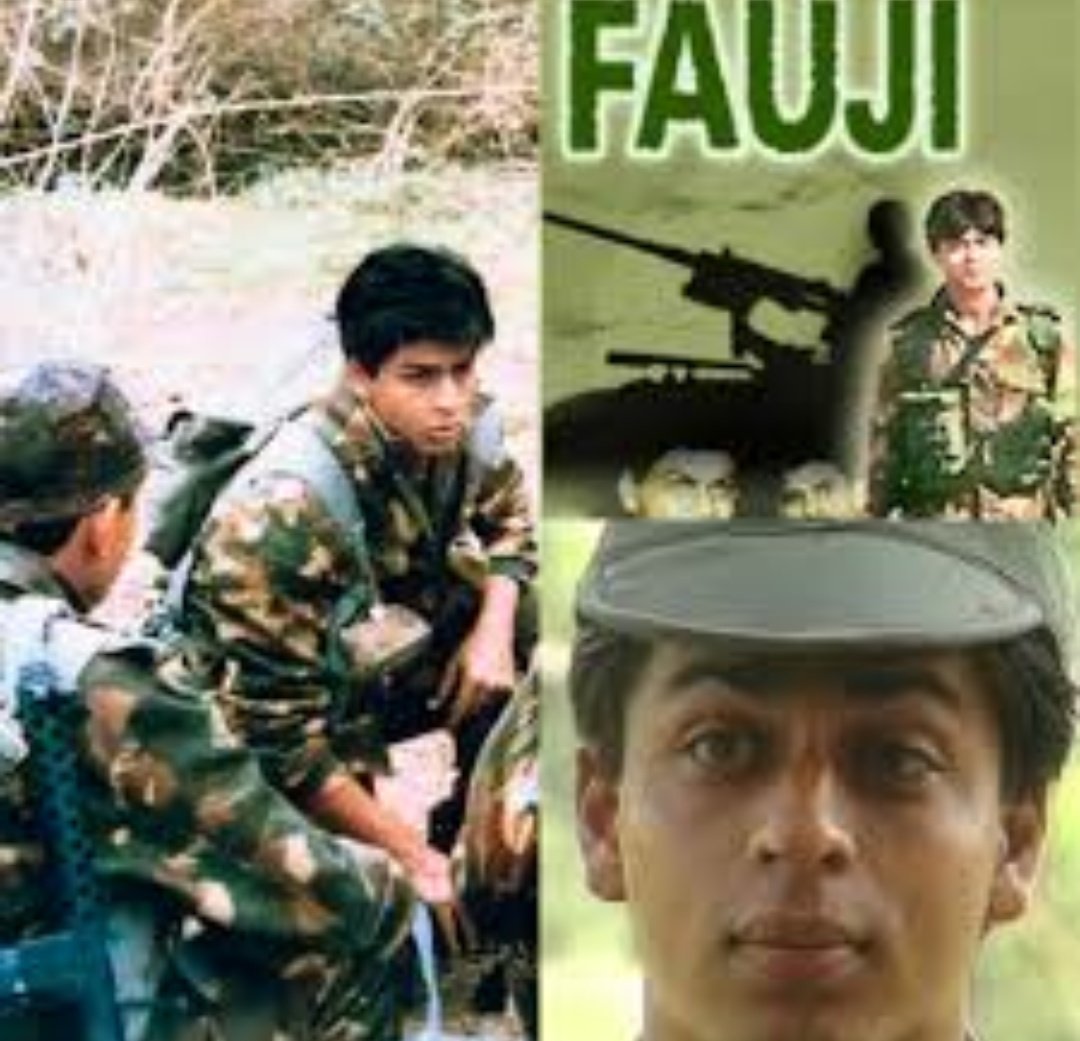
Today’s ‘the’ Shah Rukh Khan became a household name with the serial Fauji
and we as teenagers blushed watching him on television and it was a topic of
hot discussion in school.
Then came the turn of the mega dramas such as Shanti and Swabhiman
that had real good content, unlike today’s daily soaps that are stretched
beyond imagination.
Today, there is no dearth of 24-hour channels but none can match the
charm of DD days and only people of that generation can relate to it.
East Europe was our
dream destination and even now when we think about the trip, we are in
disbelief as it was like a dream.We didn’t go
to the crowded places or popular tourist destinations. But all places we visited were picturesque
locations, and we would love to go there again and again. Do read our trip plan
at the end.
A visit to Europe was a
dream and even now sometimes I am still in disbelief whether it’s really been
fulfilled or if it was some beautiful dream. The plan started almost six months
back. Finally the day arrived on Dussehra early morning. After a long wait at
Delhi airport, we boarded the plane to Helsinki, Finland. I, husband and sonny
were smiling ear to ear as all through we have been very hush-hush about the
plan; we were very superstitious, in case it gets cancelled.
I was little unwell but the
moment I landed, I forgot everything. The surroundings outside was like a
painting.We had a long wait at the
airport for our next flight to Budapest, Hungary. Now we feel we could have
spent some time at Helsinki city, but we will definitely do it next time.
What’s the harm in dreaming?
We reached Budapest at
midnight and our hotel car was waiting for us at the airport. On our way to the
hotel, we had a night view of the city — glittering in what looked like tiny
sparkling lights from a distance. We were already in love with the city and
were just waiting for the sun to rise so that we could explore the beautiful place.
So excited we were that we had no signs of jetlag.
We had an elaborate
breakfast in the hotel and the first thing we experienced was a cruise on the Danube
River on a chilly, windy but sunny morning, which gave us a river’s eye glimpse
of the city from the blue waters. Though the city was new to us, it was not at
all tough to locate a hop-on hop-off tourist bus and we went around the city
admiring the picturesque locations. The best part was we could avail of the bus
facility the next day too with the same tickets as they were valid for 48
hours. For lunch, we opted for Hungarian cuisine and we loved it.
As the day turned dusky, and
we were just strolling in the markets, we heard a familiar tune. As we turned,
we saw a group of ISKCON followers singing and dancing Hare Krishna Hare Rama that too in Indian attire — saris and dhoti kurtas.Mini India in Hungary! We had a smile on our
faces and I felt like dancing with them but then stopped myself, thinking not
to experiment too much in a foreign land. Nobody was bothered about what others
were doing and that is what I liked the most. In two days, we saw the Danube River,
Parliament, Chain Bridge, Synagogue (Jewish worship place), Heroes’ Square,
City Park, Citadella at Gellert Hill, Buda Castle (from a distance), Szechenyi
Burda (thermal bath), St. Stephens Basilica, et al.
Just in two days, the city had
become familiar to us and we already knew where to catch bus, where to find
food and how to take a taxi back to the hotel. But it was time to bid adieu to
the city as the next day we had a flight to Split, Croatia, via Bonn,
Germany.As we waited at the Cologne
Bonne airport, we observed different people of different nationalities all
moving from one country to another, and the thought that came to my mind was — wow
the world is so small.
As we flew to Split, we
could view the beautiful Swiss Alps from above. We were mesmerised by the
snow-clad mountains and started planning our Switzerland visit already — at
least once in this lifetime. As we neared our destination, we could see perfectly
blue seas and green islands and the view was breath-taking — just like a
picture postcard. My sonny was kind enough to give me the window seat for some
time as he saw I was busy clicking pictures from the middle seat itself, and
maybe he was disturbed by mommy too. I was so occupied looking down for quite long
that I started feeling dizzy but luckily the plane landed soon and all went
well. At the Split airport, we had a long interview with the immigration officials
as we were on a Schengen visa and Croatia didn’t fall under it, though it
allowed entry on that visa. One of the questions was, “Is this your beba (son
or maybe baby she meant)?”, pointing at our son. I and my husband almost echoed
together, “Yes”. Of course, didn’t want to lose sonny, never. She said, “Sorry,
part of our job” at the end, with a smile. It was finally over and by the time
we reached the conveyer’s belt, only our luggage was left. Our apartment driver,
a young girl, was waiting for us outside and seemed little restless but was
okay when she got to know the reason behind the delay. She was quite friendly
and I found her face familiar with our Bollywood’s Kalki Koechlin.
The drive was long and we discussed
various topics, even India’s population and the job scenario as she felt there were
not many industries in Split so there was not much scope for growth. We felt, ‘wow
no industry’ and that is what we wanted to enjoy, no industrial pollution —
away from the choked air of Delhi.After
about half an hour, we reached our apartment and there was a smile on my son’s
face as it was a duplex and there was a narrow staircase inside to reach the
bedroom. It was a cosy apartment and we loved it. Our host, after giving a
description of the apartment and the map of the place, left us on our own and
the apartment was ours for the next three days. The feeling was good to have a
temporary home in an alien country. We had hot coffee and some readymade snacks
we had carried from India, got ready and was outside to explore the new place.
Our apartment was at a slope
and we had to go down to reach the main market and the sea. We were lucky to
have got an apartment in the old town; the moment we saw the dark blue seas, we
were all smiles. There were tourists from different countries — some were
strolling, some just sitting and enjoying the sunset. And we did what we loved
the most, clicked pictures. We got to know that a one-hour cruise-like-boat
ride was available and our itinerary for the next day was fixed. Saw multiples
of sea ducks and sea gulls flying down on the sea for a good meal of sea
fishes. We found a small food joint and packed our dinner which we customised
with some familiar ingredients of veggies and chicken. We shopped some
breakfast essentials from a neighbourhood shop.
After a good night sleep,
the next day the first thing we did in the morning was to go for the boat ride.
We went to the top of the boat and took
the seats that had been tied with ropes to the iron grille. After some time, we
got to know the secret of the ropes. The sea was choppy. Some parts of the ride
were scary because of the huge waves. But we forgot everything as the view was
spectacular — blue sea, blue sky, green and brown hills. The guide gave us a description
of the places and also told us how at regular intervals the sea water is taken to
test how clean it is. On way, we saw some daredevil climbers negotiating the
flat rocks on the shore with bare hands. Others were kayaking amid the dancing waves.
In the evening, we had a round of the local market and found a bakery. After
a pizza lunch, we were really hungry and relished on pastries and potato pie.
My husband found the potato filling similar to our samosa. What else do we need to survive? We would settle ourselves
on a bench and observe how tourists came to holiday with their dogs of
different breeds as they were like their family; many aged people even came on
wheelchairs to relax, after all if one is a traveller at heart, age is no bar.
We still remember the camaraderie of a white couple who adopted three Asian
girls. We also saw a lot of couples of different nationalities. The next morning, we decided we
should look for a beach as till that time we could not get down on the water.
And after 3-4km walk, we found one. And what beach it was. Spotlessly clean.
White sand. Just a couple of tourists. A cool breeze. Bright sun. Green and
white mountains in the backdrop. The Adriatic Sea looking just pristine — Italy
on the other side. Giant ship liners cruising at a far distance. Felt like
settling there forever. I even thought of a business idea. Selling coffee and snacks
to tourists. But life is not so easy. Since it was quite far from the old town,
there were very few people there, only a few mad ones like us who are always on
a lookout for an exclusive place. We got down, walked on the water but it was
chilly so decided to sit on the shore. Even my 10-year-old kept on looking at
the sea blankly like a philosopher. There was a park nearby and he played to
his heart’s content as there were very few kids to fight for the rides. In
three days, we felt we belonged to that city but every good thing comes to an
end and it was time for us to visit our next place — Dubrovnik.
We took a bus to Dubrovnik
and on our way crossed Neum, a tiny town of around 4,000 people in Bosnia, nestled
beside an inland extension of the Adriatic Sea. The landscape was equally
beautiful, especially the orange orchards, orange-roofed similar-looking even houses
and the blue sea moving with us all the way. We thought if the bus stopped for
some time, we could have a closer look. It did, but only for passport check and
a snack break and we had to click pictures from inside. By late afternoon, we
reached Dubrovnik — the gigantic cabled-stayed Franjo Tuđman bridge, similar to the one
inaugurated in Delhi sometime back, and massive cruise liners, welcoming us to
the mystical hilly town that overlooked the Mediterranean Sea.
From the bus stand, we took
a taxi to our apartment, a short distance. As we got down and were looking for
our apartment number, I heard a
very welcoming voice, “Please come, I am waiting for you!” She was our new host.
And I would say, this apartment was better and bigger. In the back lawns
behind the kitchen window, there were pomegranates, lemons, oranges hanging from
the trees. Felt like plucking but just like the forbidden apple, we stopped
ourselves. The host offered some handmade snacks and they were yummy. By then,
it was evening and we asked our host if it was safe to roam out and she was
like, “of course”. After a short chat, she left us on our own for the next
three days. We ventured out and opted to walk to the old town as our host told
us it was just 10-minute walk. But it was not so near as we found out. After
about half an hour of walking through neat roads and beautiful houses, we
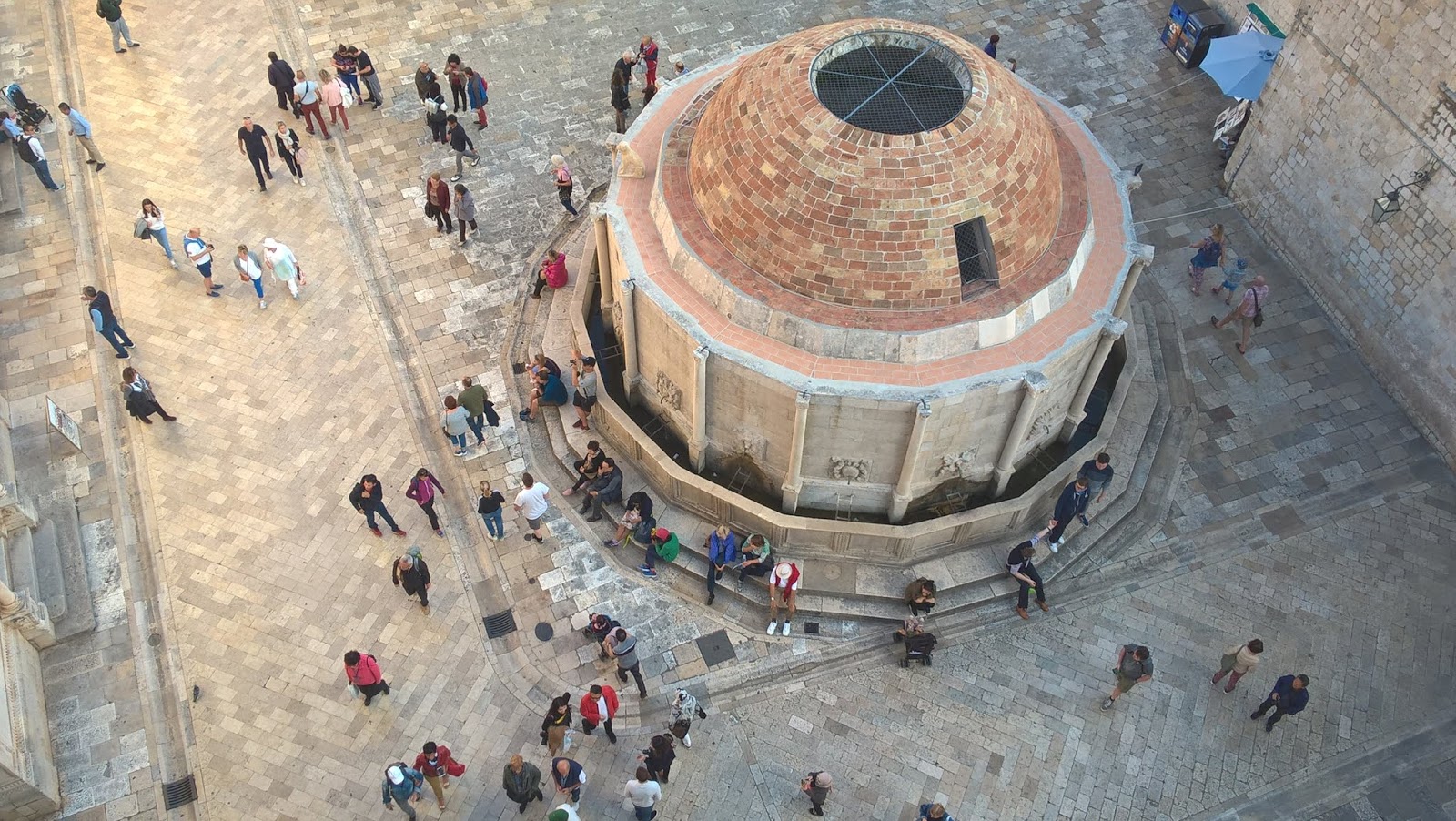
reached the fortress housing the castle town, the place where parts of Game of
Thrones were shot. Quite a few musicians were playing different instruments on
the sideways — projecting a touch and feel of a Bollywood background score as
we were exploring the new city, almost like giving us a royal welcome.
We were starved after the
long walk and started looking out for some good food. By then we were already
missing our rice and roti and Indian food. Where ever we looked, there was
bread, pizza, burger, pasta and we were like “NO.” And somewhere in between, I
had a glimpse of a poster that said, ‘Incredible India’. We were in disbelief. A
few Bollywood dialogues instantly came to my mind: ‘If you want something from
heart, you definitely get it.’ We ordered butter chicken and roti and we almost
devoured it like we hadn’t eaten in ages. Though the food was not that good, there
was a feeling of content.
Next morning, we went for
the famous Zicara, the ropeway/cable-car point to climb to the top of a hill
from where we could have a panoramic view of the city and it was worth
visiting. By then, we had become veteran walkers, including our 10-year-old. In
fact he took the lead to show off that he knows the way quite well. We again
visited the old castle and this time on the side of the sea. We saw huge boats
waiting for passengers and without any second thought; we took the ride to the Lokrum
Island — a Nature
Reserve and a Special Forest Vegetation Reserve, which is home to a variety of
flora and fauna and castles. We would have missed an experience if we hadn’t
visited the island. There was loads of greenery with multiple green species,
peacocks, rabbits, all roaming here and there. We also passed a graveyard but
left the ghosts undisturbed, if any still there. We sat on the rocks admiring
the sea leisurely as the last boat to return to the mainland was 5 pm and we
had ample time in hand. We were on biscuits and chocolates almost the whole day
but we were okay as it was a lifetime experience.
After coming back to the old
town, my husband was adventurous enough to climb to the top of the castle and
walked the entire city wall, which must be about 2-4 km. I and sonny waited
down watching multiple tourists and listening to them. Though we didn’t
understand what they said, the excitement was clear in their voice, specially
the Japanese tourists.
We had dinner at 6pm, which
was evening snacks time back home, and this time we went for an Italian
restaurant. The chicken risotto, chicken salad and grilled chicken were
luscious. I would say chicken just saved us as most of the dishes had beef on
it, so we were very choosy. Though my husband was ready to experiment, I and my
sonny were happy with our chicken delicacies. On our way back home, my husband
went to a department store and bought eggs, milk, bread, cheese for breakfast the
next day.
My husband was too excited
to cook something in the beautiful kitchen and served us some hot spaghetti,
cheese scrambled eggs with coffee and bread. We started a little late and went
in search for a beach location and found one after a half-an-hour walk. I and
sonny get mad to soak our feet in water but my husband needs a little push.
After some time, we made ourselves comfortable on a wooden platform and let sonny
play in the water. We saw a couple, must be 60 plus. They went for a swim and
it was too cute to watch them romancing in the water and teasing each other. Ageing
together in love! We went inside the castle city again in search for food. We
also had the opportunity to see a wedding inside. And most tourists like us
were waiting to see the bride and the groom and the moment they came outside
hand in hand, everybody started clapping. After all, it’s always a treat to see
newlyweds and everybody says ‘God bless’ automatically in their minds. These things
are the same everywhere, and what a wonderful feeling. One day, the newlyweds
will share their story of marriage to their grandchildren that they got married
at the same location where Game of Thrones was shot.
The next morning was October
28, when we would fly to capital Zagreb in the afternoon. My husband started
waking me up as it was 7 am. But when I checked my mobile, it was 6 am. The
confusion ended when we searched the internet and found that from that day,
every year, the clocks are set back by an hour in Europe as winter had set in.
Thank God, we didn’t have any flight to catch in the morning. The weather was very windy and chilly and later we got to
know that a very bad storm had hit the other side of the sea in Italy. We spent
some time beside the old town, having a last glimpse of the sea. God knows if
we would ever return. We hurried back to the apartment as we didn’t want to be
stuck in rain and storm. Our host requested us to take her neighbour’s car and
we readily agreed and understood the reason when we saw the old man who drove
us to the airport — maybe she wanted him to earn a few bucks.
It was raining heavily and
the flight got late by over an hour. By the time we reached the hotel in
Zagreb, it was quite late and after a quick dinner at a fine dine restaurant in
the Capitol Square, we went to bed. The next morning we went to explore the
nearby places as we had a flight to Vienna in the evening. What we loved most
was the local market with lot of flowers, cheese, fresh vegetables, fruits, et
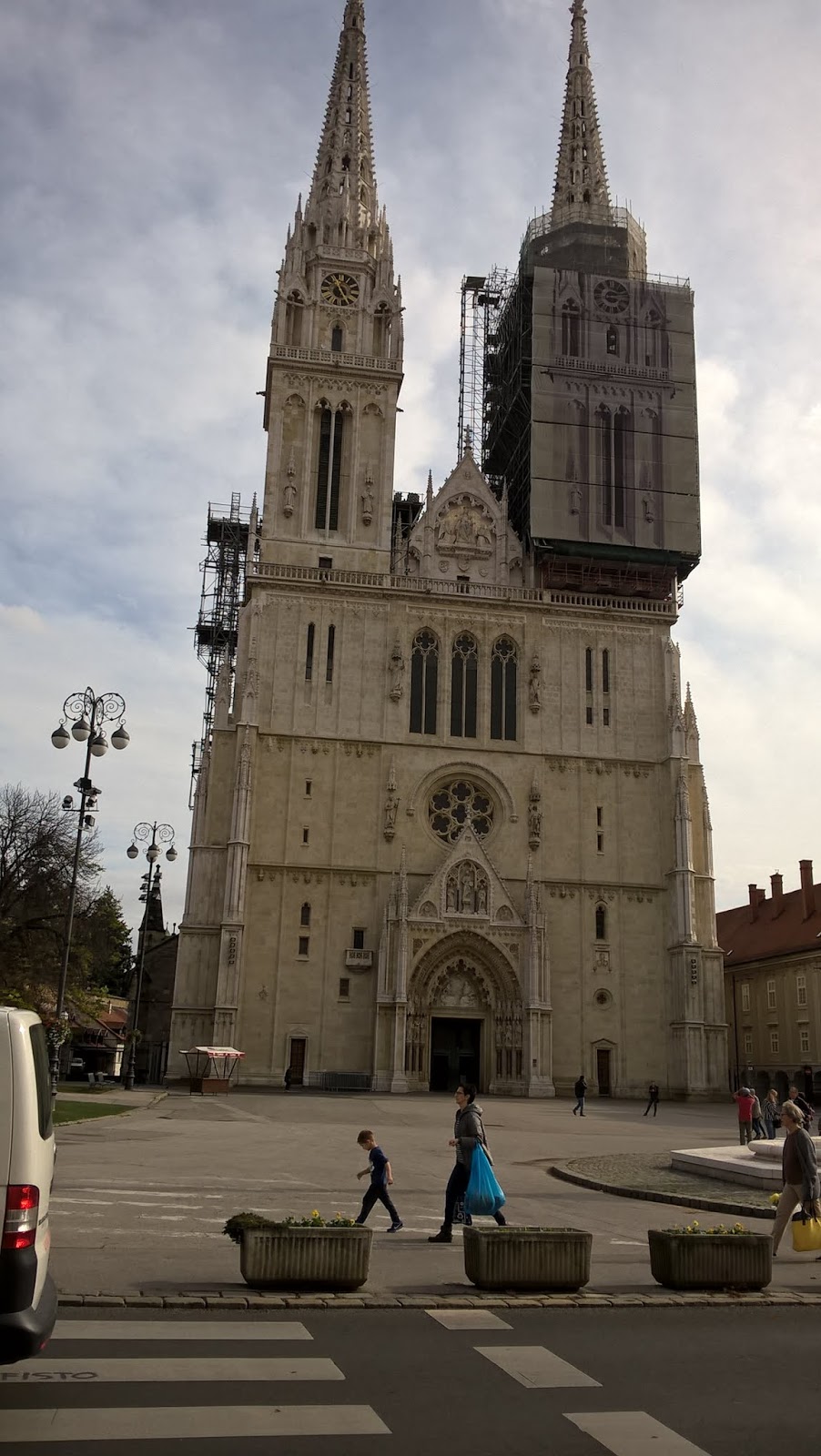
al. The old town with gigantic churches and buildings with Gothic architectureand tram lines running somewhat resembled Budapest. We
would have loved to explore more but it started raining. We had a quick snack lunch
and hurried back. We had shopping bags in our hand and we covered our heads
with them. Though a few kids laughed at us, after some time we saw people
copying us as they also had no umbrellas — this is called Indian jugaad.
Our return flight to Delhi was via Vienna, where we had a
four-hour stopover. We were surprised to see the size of the tiny two-by-two
seater plane to Vienna and doubted if it would take off. But it did and we
reached safely after a short flight. When we were about to land in Vienna, the dazzling
city looked beautiful from above. Again we regretted, thinking that we could
have stayed there for a day at least. But we had a flight to catch at night for
Delhi. When we were waiting at the airport, we saw a lot of Indian faces after
days and felt good. It was a jumbo plane — the Air India dream liner — and
boarding started almost one and half hours early. I saw a group of European
tourists who seemed a little worried as their guide was scaring them by telling
not-so-good things about India. Though I didn’t understand their language, I
could clearly read the fear in their faces. On board, I killed time by watching
two Bollywood new movies. And finally the next morning, we reached our very own
Delhi. Everything seemed familiar now. Suddenly I saw the same European
tourists standing in a corner of the airport. I approached them and said,
“Welcome to India. India is a beautiful country and the people are good. Don’t
be scared. Enjoy!” And they smiled at me. I felt I am just back from their
place and had a beautiful experience and this was the least I could do to bring
a smile on their faces. After all, we belong to incredible India and there are
lot of good things here too.
Our plan trip and journey in short
From the Delhi airport, we boarded the plane to Helsinki,
Finland, where we had a long wait for our next flight to Budapest,
Hungary. We later felt we could have spent a day at the city. But you can definitely
do that.
We reached Budapest at midnight. Our hotel car was
waiting for us at the airport. The next morning, we experienced a cruise ride of
the Danube River. We boarded a hop-on hop-off tourist bus on
which we went around the city, exploring and admiring the picturesque
locations. We could avail of the bus facility the next day too with the same
tickets as they were valid for 48 hours. For lunch, we opted for Hungarian
cuisine. In two days, we saw the Danube River, Parliament, Chain Bridge,
Synagogue (Jewish worship place), Heroes’ Square, City Park, Citadella at
Gellert Hill, Buda Castle (from a distance), Szechenyi Burda (thermal bath),
St. Stephens Basilica, et al.
After three days, we had a flight to Split,
Croatia, via Bonn, Germany. We
had a layover at the Cologne Bonne airport for our next flight. If you want,
you can spend a day or two in Bonn.
As we flew to Split, we could view the beautiful Swiss
Alps from above. At the Split airport, we had a long interview with the
immigration officials as we were on a Schengen visa and Croatia didn’t
fall under it, though they allowed us entry on that visa after due checks. Our
apartment driver, a young girl, was waiting for us outside. After about half an
hour, we reached our apartment, it was a duplex and was ours for the next three
days.
Our apartment was at a slope in the old town and we
had to go down to reach the main market and the dark blue seas. We got to know
that a one-hour cruise-like-boat ride was available and our itinerary for the
next day was fixed. In the evening, we had a round of the local market. The
next morning, we decided we should look for a beach. And after a 3-4km walk, we
found a beautiful one. The Adriatic Sea looked just pristine — Italy on the
other side. Giant ship liners were cruising at a far distance. If you want, you
can add Italy in your list and enjoy a cruise journey from Split. At the same
time, you can go to Dubrovnik from Italy on a ship.
After three days in Split, it was time for us to visit
our next place — Dubrovnik. We took a bus and on our way crossed Neum, a tiny
town, nestled beside an inland extension of the Adriatic Sea. The landscape was
beautiful, especially the orange orchards, orange-roofed similar-looking even
houses and the blue sea moving with us all the way. The bus stopped for some
time for passport and visa check as we crossed 20-km stretch of Bosnia. By late
afternoon, we reached Dubrovnik — the gigantic cabled-stayed Franjo Tuđman Bridge
and massive cruise liners, welcoming us to the mystical hilly town that
overlooked the Mediterranean Sea.
From the bus stand, we took a taxi to our apartment, a
short distance. This apartment was better and bigger. In the back lawns behind
the kitchen window, there were pomegranates, lemons, oranges hanging from the
trees. The host left us on our own for the next three days. We ventured out and
opted to walk to the old town. After about half an hour of walking through neat
roads and beautiful houses, we reached the fortress housing the castle town,
the place where parts of Game of Thrones were shot. That night, we had Indian
food.
Next morning, we went for the famous Zicara,
the ropeway/cable-car point to climb to the top of a hill from where we could
have a panoramic view of the city. We again visited the old castle and this
time on the side of the sea. We saw huge boats waiting for passengers; we took
the ride to the Lokrum Island — a Nature Reserve and a Special Forest
Vegetation Reserve, which is home to a variety of flora and fauna and castles.
After coming back to the old town, my husband was
adventurous enough to climb to the top of the castle and walked the entire city
wall, which must be about 2-4 km. If you are an adventurous one, you should try
the walk as the view from the top is breath-taking.
We had dinner at 6pm— chicken risotto, chicken salad
and grilled chicken.
The next day, we started a little late and went in
search for a beach location and found one after a half-an-hour walk.
The next morning was October 28, when we would fly to
capital Zagreb in the afternoon. My husband started waking me up as it was 7
am. But when I checked my mobile, it was 6 am. The confusion ended when we
searched the internet and found that from that day, every year, the clocks are
set back by an hour in Europe as winter had set in. Thank God, we didn’t have
any flight to catch in the morning. We spent some time beside the old town,
having a last glimpse of the sea. We hurried back to the apartment and took a
car to the airport.
It was raining heavily and the flight got late by over
an hour. By the time we reached the hotel in Zagreb, it was quite late and
after a quick dinner at a fine dine restaurant in the Capitol Square, we went
to bed. The next morning we went to explore the nearby places as we had a
flight to Vienna in the evening. Zagreb is good for a day or two. What we loved
most was the local market with lot of flowers, cheese, fresh vegetables,
fruits, et al. The old town with gigantic churches and buildings with Gothic
architecture and tram lines running somewhat resembled Budapest.
Our return flight to Delhi was via Vienna, where we
had a four-hour stopover. We were surprised to see the size of the tiny
two-by-two seater plane to Vienna. We reached safely after a short flight. When
we were about to land in Vienna, the dazzling city looked beautiful from above.
Again we regretted, thinking that we could have stayed there for a day at
least. But you can always spend a day in the city. For Delhi, we boarded a
jumbo plane — the Air India dream liner. Boarding started almost one and half
hours early. And finally the next morning, we reached our very own Delhi.